Pages

Showing posts with label fundamental rights. Show all posts

Tuesday, September 13, 2016

Maharashtra State Authority to hear complaints against Builders - country first


With complaints against Builders riding in numbers, the Maharashtra State Government has decided to constitute a Housing Regulatory Authority to safeguard the interests of homebuyers. 

The authority will be a quasi-judicial body and resolve disputes related to the housing sector. Four benches are likely to be established to hear the cases at different cities in the state.

With this decision, Maharashtra, with the highest ratio of urbanisation and real estate activities in the country, will become the first state to constitute such an authority,

The Maharashtra Housing (Regulation and Development) 2012 was passed two years ago and Presidential assent came in 2014.

The deadline to frame rules for the authority is October 31 and the process is underway.

An officer attached with the housing department, said, 
"There are over 30,000 disputes pending before various courts and forums regarding alleged malpractices by developers, Most of the complaints from Mumbai and Pune are because of the high density of housing construction activities. After drafting the rules, objections and suggestions will be invited from the people to make more reforms before constituting the body."

"The state has received the official nod from the Centre to set up its own regulatory authority for the state. We are in the process of forming rules and regulations after which the authority will come into existence," he added.

Source: http://www.punemirror.in/pune/civic/Govt-body-to-solve-homebuyers-woes/articleshow/54299390.cms

Saturday, June 25, 2016

Personal Laws on the basis of Religion - A Trap


Supreme Court asked the government to file a copy of the report of a committee that is inquiring into personal laws relating to marriage, divorce and custody. Unsurprisingly, the uniform civil code (UCC) debate has been revived. The nationalists want a UCC to further their cultural majoritarian project. They cite the directive in Article 44 of the Constitution requiring the state to “endeavour to secure for the citizens a uniform civil code”. The All India Muslim Personal Law Board (AIMPLB) sees the continued existence of Muslim personal law as a symbol of a distinct Indian Muslim identity and an area of law with divine sanction and, therefore, beyond the purview of temporal government. It uses the constitutional guarantee of the “right freely to profess, practise and propagate religion”.


Between these intransigent outposts stands the baffled liberal citizen. She worries about the AIMPLB’s indifference to another constitutional right in Article 15, which prohibits the state from discrimination on the grounds of sex, and rejects the claimed divine immunity because it is contrary to public reason. She is also skeptical of the Hindu right’s hypocritical use of the anti-discrimination argument, given its predilection to enforce gender norms and indifference to the discriminatory tax implications of the Hindu Undivided Family. Often forgotten are nuanced interventions by the Bharatiya Muslim Mahila Andolan, the All India Muslim Women Personal Law Board, Awaaz-e-Niswaan, and countless individual litigants.


Source - http://indianexpress.com/article/opinion/columns/the-trap-of-personal-laws-uniform-civil-code-aimplb-supreme-court-2775249/

Sunday, March 13, 2016

In defence of a revolutionary - Reopening the trial of Shaheed Bhagat Singh and his team - IndianExpress


Eighty-five years after the hanging of Bhagat Singh, lawyers from India and Pakistan have joined hands to re-open, and overturn, the sham trial that led to his death.

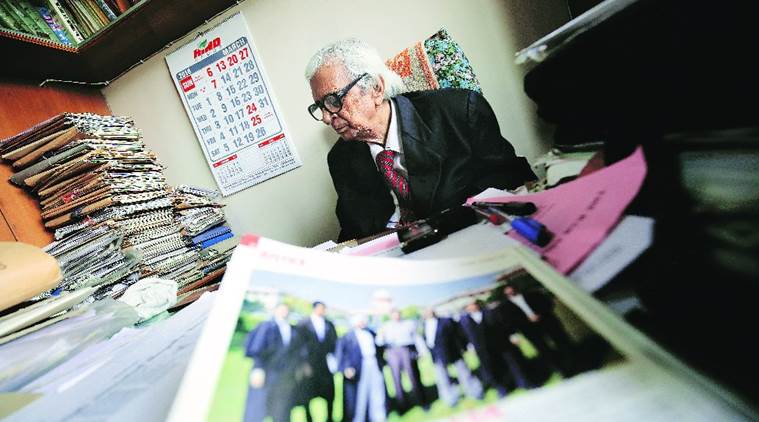
In a dark, poky room that constitutes his chamber in the new block of the Supreme Court, Delhi, Nafis Siddiqui, a 77-year-old criminal lawyer, has been preparing for a most unorthodox case for the last two years. 

As part of his research, he has been reading up on cases where verdicts have been upended after long periods of time. He cites the case of George Stinney, a young boy, exonerated 70 years after his death by a court in US (in 2014), that found he was denied due process. Siddiqui points out another relevant trial; the ongoing legal battle between the British government and victims of Kenya’s Mau Mau emergency, who are demanding compensation 50 years after the events. “When it comes to infringement of fundamental rights, a delay in the matter is of no consequence,” he says.
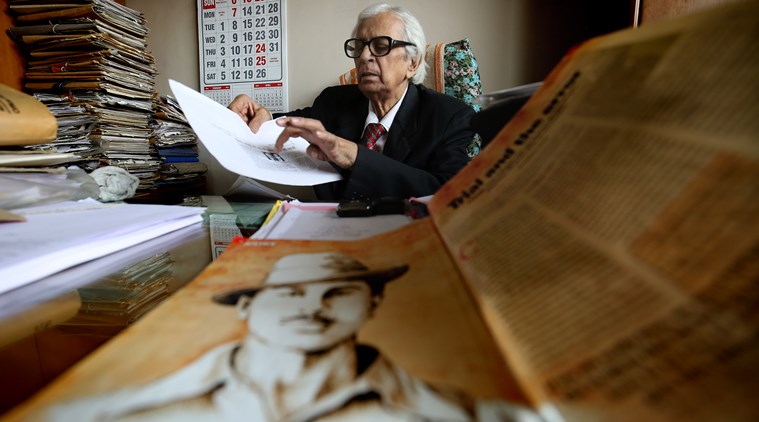


With loose-flowing white hair, thick-framed glasses and oversized black coat, Siddiqui is an idiosyncratic figure. He pulls out a thick brown folder marked “Bhagat Singh”, with whom he has grown to be familiar through history books and family lore — Siddiqui’s father-in-law, Hasrat Mohani, a freedom fighter, communist and poet, credited for coining the slogan, “Inquilab Zindabad!”, had a great influence on the revolutionary. “I mostly handle cases of murder, and this is clearly a case of political murder,” he says.
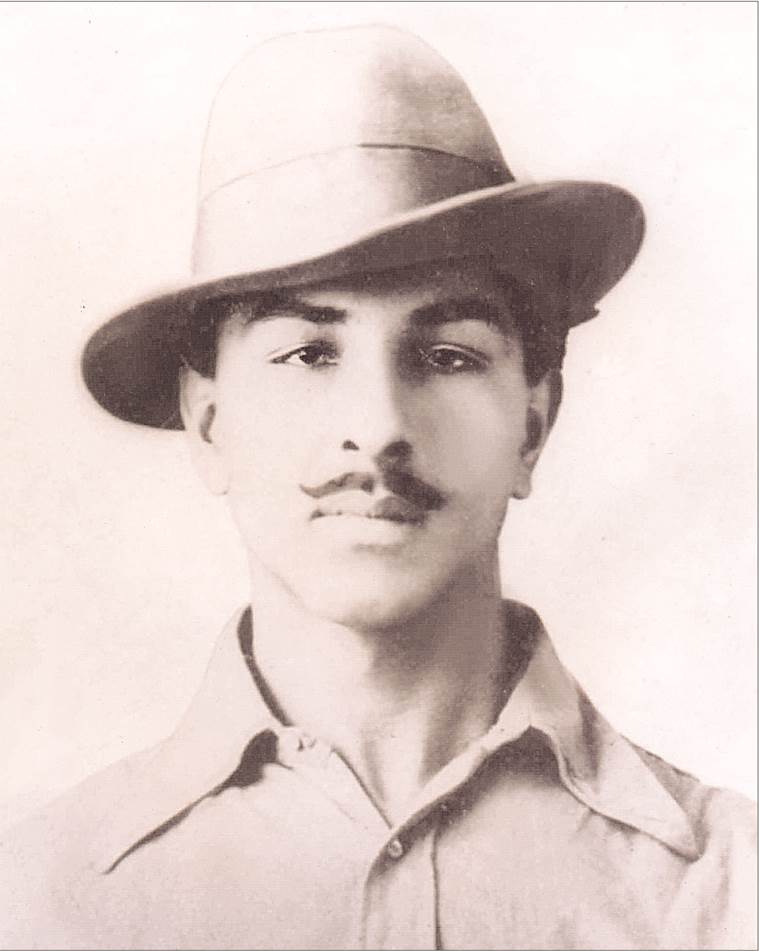


Eighty-five years after the hanging of Bhagat Singh, a lawyer from Pakistan is trying to pull off what is either an audacious attempt to change the course of history, or a fool’s errand. In 2014, Siddiqui was approached by Lahore-based Imtiaz Rashid Qureshi — who has been fighting a lone battle to prove the innocence of Bhagat Singh — to advise him on his case. Qureshi’s petition, which was filed at the Lahore High Court in 2013, seeks to reopen the case of the hanging of Singh and his compatriots, Sukhdev Thapar and Shivaram Rajguru, whose death anniversary will be celebrated on March 23 as Martyrs’ Day. In February this year, a two-member division bench in Lahore referred the case to a larger bench. For Qureshi, who argued that only a bench of three or more members could undo the decision of the three-member bench that awarded the death sentence in 1930, it was a moment of victory.

The first breakthrough came in 2014 when the court handed him a copy of the original FIR for the murder of British police officer John Saunders lodged at Lahore’s Anarkali police station in December 1928. The FIR does not name any of the three accused.


This is just one of the many discrepancies of the Lahore Conspiracy Case, which lasted for nearly two years and is universally recognised as a sham trial. As AG Noorani detailed in his book, The Trial of Bhagat Singh, from the lower court to the tribunal to the Privy Council, it was a judgment that represented a total compromise of the legal process.

The accused remained absent through the proceedings and remained unrepresented. Halfway through the trial, an Indian judge, deemed sympathetic to the accused, was removed from the tribunal. Many other rules of law were flouted. In a scathing editorial that appeared in April 1931, in the Marathi newspaper Janata, soon after the hanging, BR Ambedkar called out the hypocrisy of the British who manipulated the trial for political ends.
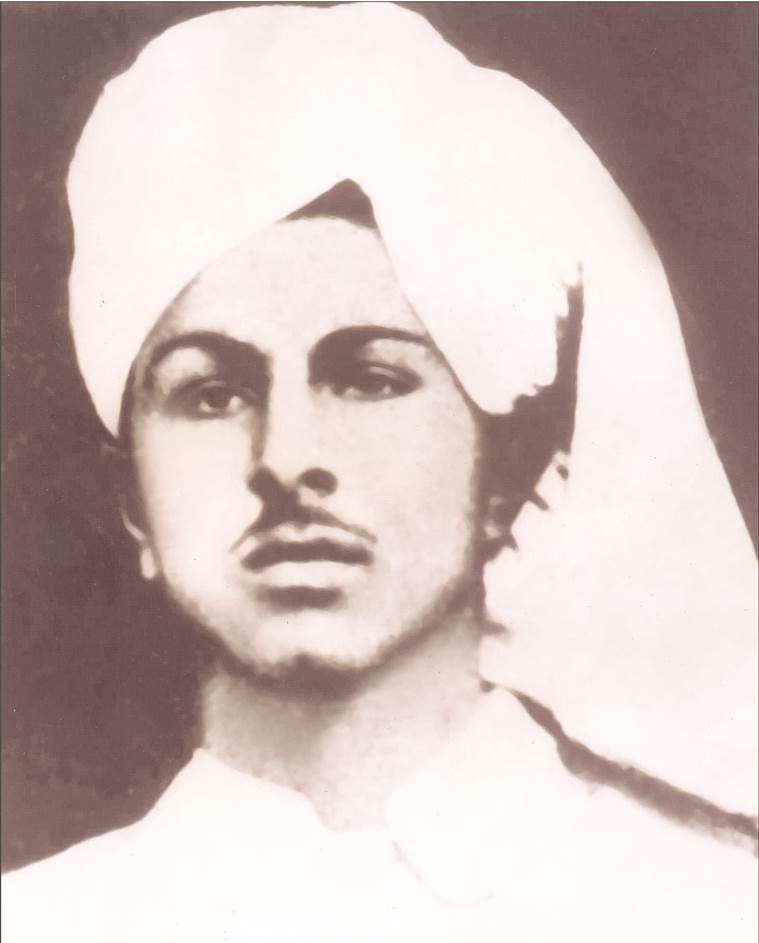


“We are demanding two things, that the British government, through the Queen, apologise to both our countries, and pay compensation to the families of Bhagat Singh, Rajguru and Sukhdev,” says Qureshi over the phone from Lahore. Loquacious and deeply committed to the cause, he calls himself a “lover of Bhagat Singh” and runs a memorial in his name, the Bhagat Singh Memorial Foundation. “This is a case that unites the two countries and it proves that Pakistan, an Islamic state, can also be liberal. Let’s not forget the Quaid-e-Azam was the only leader to have publicly defended him.” In a speech he gave in the Central Assembly in 1929, Mohammad Ali Jinnah had famously expressed his sympathy for the revolutionaries.

Qureshi’s pursuit has had a ripple effect in India. In Ludhiana, the descendants of Sukhdev Thapar have recently written to the Indian government, demanding a copy of the FIR and papers related to the judgment. Ashok Thapar, (a great-nephew, his grandfather was the younger brother of Sukhdev), who runs the Shaheed Sukhdev Thapar Memorial Trust, says, “We want government support to go to Lahore and pursue this case, or we will file an RTI. As his blood relations, we have a claim.”
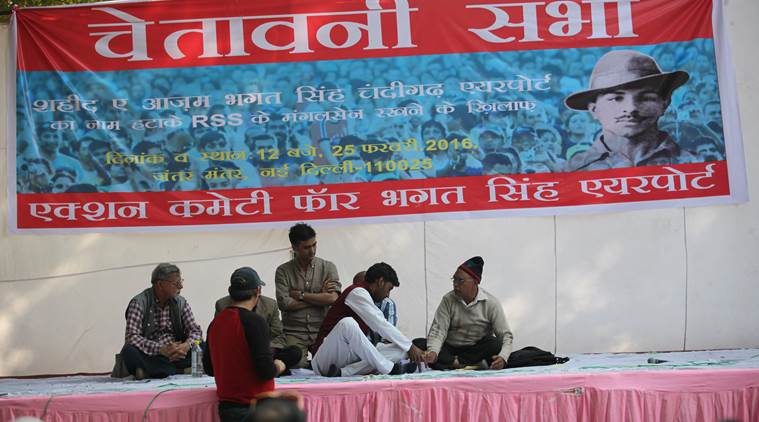


More than perhaps the verdict, the reopening of the trial is crucial for another reason. There is renewed hope that the court will order the release of about 164 files related to the case, which are with the Punjab Archives in Lahore. They have been treated as “sensitive”, and no historian or researcher has ever been allowed to access them, says Ludhiana-based Jagmohan Singh, a researcher on Bhagat Singh. He also happens to be Bhagat Singh’s nephew, born to his sister Bibi Amar Kaur. But, unlike the sustained campaign around the declassification of the Netaji files, these files have been neglected. Yet, they are a crucial part of setting the record straight.
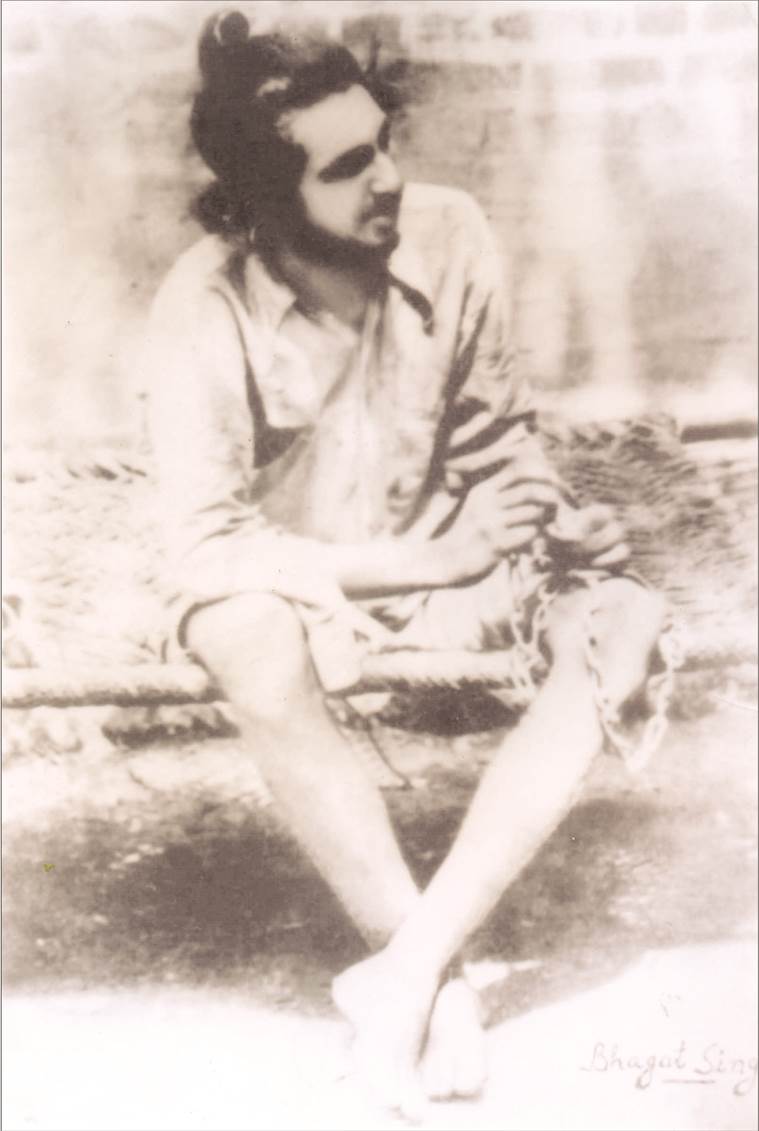


“The trial may or may not change history, but it’s the right of the people to know what happened, and those files will help us get there,” says Shantanu Rajguru, a great-grandnephew of Shivaram Rajguru. The family lives in Pune and is currently putting together a biography on the revolutionary. It was Rajguru, known as the marksman of the group, who fired the shot that killed Saunders. But Rajguru, like Sukhdev (who was in charge of coordinating the operation to avenge the death of Lala Lajpat Rai), has been reduced to a footnote in history, believes Shantanu. The descendants of Sukhdev believe that the retrial should not be held in the name of Singh alone.

*****
Apart from the context of historicity, the trial is significant as a measure of the democratic struggle in Pakistan being led by the civil society. The effort to reinstate Bhagat Singh as an icon has gathered force in recent times, as he has emerged as a symbol for the secularists in their battle against illiberal forces. Singh belongs to the pantheon of heroes of the Indian subcontinent. He is venerated in Punjab where he was born. “The PIL is an important political and historical development in a country and a region where history is often distorted in textbooks, held hostage to nationalist expediencies and heroes like Bhagat Singh are simply whitewashed or relegated to a footnote,” says Raza Naeem, a social scientist and activist from Lahore, over an email interview.


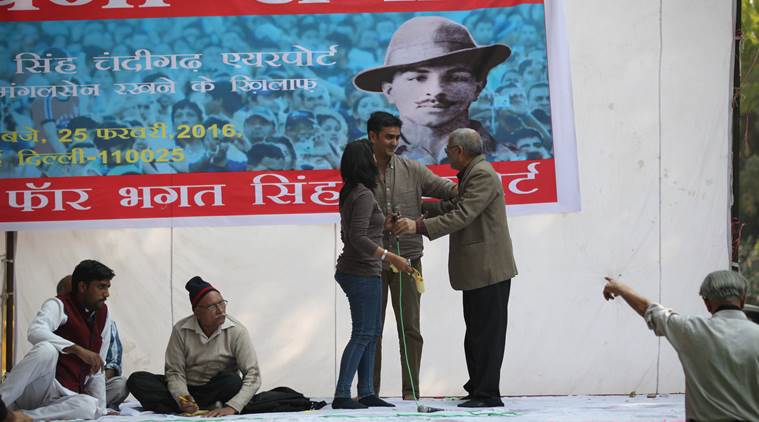
While there is no official celebration of his martyrdom day in Pakistan, every year, on March 23, there is a gathering of activists at Shadman Chowk, next to Lahore Jail, where he was executed. Since 2001, there has been a movement demanding Shadman Chowk be renamed Bhagat Singh Chowk. The government agreed a few years ago, but capitulated when Islamist groups objected to the icon on grounds of his religious identity. In a conciliatory move last year, the government announced a package of Rs 8 crore, for the restoration of his ancestral house in Faisalabad district.

“I have attended the annual gathering at the chowk for a few years and every year, the movement has grown,” says Haroon Khalid, Pakistani author and journalist. “It is now part of the broader debate that seeks to widen the horizons of Pakistani nationalism by incorporating non-Muslim heroes as well. Another interesting dynamic of this movement is that it also comes at a time when the Pakistani state actively wants to re-project itself as a liberal secular state. There has been particular focus on the protection and promoting of Sikh heritage in the country. Bhagat Singh is seen in that broader framework of this Sikh heritage,” he says.

*****
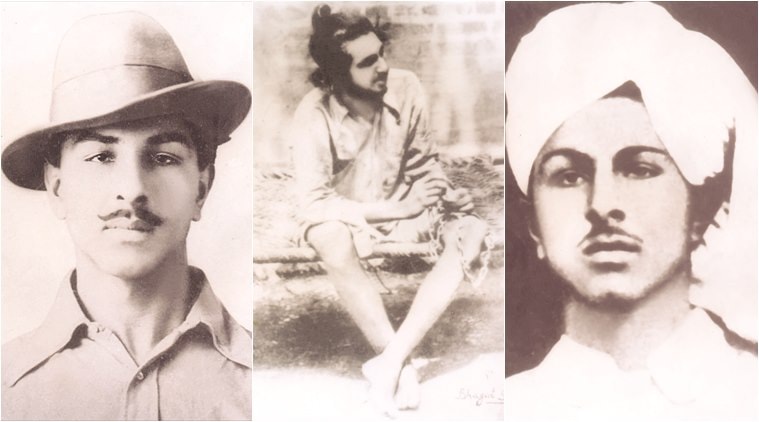

(The other aspects touched in the original article are not subscribed to or agreeable with me. It would be a narrow approach to stifle the Patriotic actions of the Revolutionaries under the Colonial Rule to a set of political isms. It is also equally wrong and disruptive to equate those Revolutionaries in the real sense to the present ongoing events involving a  few misguided, politically motivated individuals.)

SOURCE - 

http://indianexpress.com/article/india/india-news-india/freedom-fighter-bhagat-singh-inquilab-zindabad-supreme-court-nafis-siddiqui-george-stinney-hasrat-mohani-in-defence-of-a-revolutionary/#sthash.WNn5MgTv.dpuf

Sunday, February 14, 2016

A Cyclists encounter with the Railway Police at Bangalore - The Logical Indian

From the #Facebook page #LogicalIndian:

#MyStory

“I have read of inhumane incidents happening in many parts of the country. But you won’t totally believe unless you encounter one. Now onward I can totally believe them.

I frequently travel to China for my official trips. One thing I always adored by Chinese people is their use of electrical or foldable bicycle which they carry with them in the subway.

This time, after coming to India I desperately started looking for such bicycle if available in India. At last, I found one BTWIN HOPTOWN bicycle at Decathlon. I immediately bought and started using it. Once I was carrying it with me on the train between the route KR PURAM to Bangalore Cantonment. I am proud of the fact that I am not the one contributing to the pollution in Bangalore.

On 9/2/2016, while exiting from Bangalore Cantonment railway station one ticket checking officer lady caught me and started demanding fine for carrying a bicycle with me. I tried to convince her, once folded it is not a bicycle at all, it weights hardly 14 kg and it is very much portable. But she insisted on asking for 6 times the fare of travel. I asked her for the railway rules regarding this and the receipt of the bill. She took my pass and made me wait for another 30 minutes and later came with an excuse that she doesn’t know the luggage rules. I was getting late and told her 6 times my fare of travel is 60 rupees and that she can have 100 rupees and let me go. But she demanded 300 rupees.

I told her even if it is 1000 rupees I will pay but I need the receipt. She presented the same excuse that she doesn’t know the luggage rules. At last, I lost my patience and started to call her corrupt. After which she slapped me, pushed me and called her police constable colleague to take me to the jail for misbehavior. He took me to the jail and started beating me. His other colleagues joined him, they undressed me and started beating me with hand, leg and sticks 5 people at a time. I was sure that I was going to die that day and only my body will be found next day. I begged them in all the possible way I can. At last, after an hour, one guy listened to my plea and asked me to pay 5000 rupees. He asked me to call any of my friends to come with 5000 rupees and then can take me back.

I called my manager Harish Haswani who came with two mutual colleagues of ours. All three had to plea to the railway police for more than an hour on my behalf as Railway police have threatened them that they will file a case against me of misbehaving with a lady officer and that I have tried to press her breast. I was very much shocked to see to what level character of a woman can fall. After too much of plea and the bribe from my colleagues they released me. The lady officer fined me 190Rs stating my bicycle weight is 40kg although it is 14kg only. Also, she fined me for ticket-less traveling though I was having the monthly pass. Also, the receipt she issued is of date 8/02/16 and not 9/02/16 on which date I travelled and the incident took place. We all were too much afraid and didn’t dare to ask her for the mistake in the receipt. All of our focus was just to save my life and get me out of there.

I am undergoing the treatment. My left hand is fractured. My friend Sarfaraz is taking care of me. I am determined never to travel by train in Bangalore again. My fold-able  BTWIN bicycle will never get used again. But at the same time, I have lost all the focus at my work. Fortunately, my mobile has done the voice recording of the entire incident. My mobile recording along CCTV camera recording at railway is enough to prove if I have done remotely any kind of misbehavior with the lady. I am determined to teach a lesson to these corrupt officials even if it cost me my life. I have written letters to all higher police authorities as well as human rights commission seeking action in this regards. They will respond but very unfortunatly as per indian goverment office time.”

And Comments thereon:


@drmsbc has replied to tweets on this issue saying that Railway police is state police and doesn’t come under railways.

https://twitter.com/drmsbc/status/698662569536417793

I will delete this post in some time since my suggestion is perhaps no longer relevant.

In the meanwhile, if you have any suggestions regarding how to approach this issue then let me know.

My original post:
-----------
The Logical Indian, could you please tweet this to @RailMinIndia
They are very prompt and they will take appropriate action.

Edit:
The summary of tweets made for this issue:
My tweet to @RailMinIndia:
https://twitter.com/amithbag/status/698599458020261888

Sidhharth (@siddhu_2011):
https://twitter.com/RailMinIndia/status/698595124578615296
(@RailMinIndia has replied to Siddharth’s tweet)

Avinash Surendran (@ashwin296):
https://twitter.com/ashwin296/status/698605652466405376

cibi s (@cibiindhu):
https://twitter.com/cibiindhu/status/698627271477870592

It looks like @drmsbc has replied to the tweets of Sidhharth, Avinash and cibi s:

“@cibiindhu @RailMinIndia @GMSWR @ashwin296 @siddhu_2011 Rly Police is state police, not under Rly. Clarification by @srdcmsbc.”
https://twitter.com/drmsbc/status/698662569536417793

So essentially it seems that they are saying that they can’t do much since Railway police is state police. Is that ticket checking lady also under Railway police and not Railway? Requesting Sidhharth, Avinash and cibi s to reply to @drmsbc and ask for clarification.
-----------

Comment #2:

Laws that were made to protect women are being used as a tool to extort money, take revenge, cry victim when a woman herself is the wrong doer and to teach a "lesson" to a man for being a man by the "empowered women". This is happening not only in metros but smallest areas around the country. While crime against Innocent and vulnerable women is happening everywhere, false accusations against innocent and vulnerable men and boys like one above is on a rise too. While there are stringent laws to take care of the former, there is little one can do in case of latter. Some time before everyone realizes the need to control this menace.

Comment #3:

#PMOIndia, Narendra Modi, Suresh Prabhu
After such incidents, do you still expect us to co-operate with the Police and have faith in these so called Law Enforcement forces in India?
Who gives them the right to even TOUCH US without any valid reason or proof? Are these people seriously the ones responsible for OUR SAFETY?
WE WILL NOT BE SUPPRESSED AND THIS NEEDS TO STOP. NOW.
#Shame

Comment #4:

Laws-

The Bangalore Metro Rail (Carriage and Ticket) Rules 2011 limit the weight of personal baggage to 15 kg. Rule 3 says: “No person shall, while travelling in metro railway, carry with him any goods other than a small baggage containing personal belongings not exceeding 60cm x 45cm x 25cm in size and 15kg in weight, except with the prior approval of the metro railway administration.” The rules also prohibit carrying explosive, inflammable, and poisonous substances.

The Metro Railway (Operation and Maintenance) Act, 2002, imposes fines and in some cases jail sentences for offences committed on the metro. Anyone indulging in sabotaging the train or maliciously hurting or attempting to hurt other passengers while travelling in the metro can face imprisonment up to 10 years. Pasting posters or drawing graffiti on the walls of stations or trains is punishable by a fine of ₹1,000 or imprisonment for up to 6 months. Travelling in an inebriated state or creating nuisance in the train is punishable by a ₹500 fine. Passengers are monitored at security checkpoints and those that are causing trouble, heavily drunk, or carrying forbidden items are not permitted to board. Spitting on the metro premises is punishable by a fine of ₹100.

Comment #5:

I hope you are innocent fight back and get back to work and train travel with your bicycle this time with any rule copy. If you are innocent nothing should stop you should fight back even if you dont have enough evidence . Expose them to society and put them to shame .believe your friends and family know your nature have confidence. We are all with you.

Reproduced here for Academic information.

Source : #Facebook #TheLogicalIndian

Monday, February 1, 2016

Draft Rights of Transgender Persons Bill, 2015 released - PRSIndia

Ministry of Social Justice and
Empowerment released the draft Rights of
Transgender Persons Bill, 2015 in January
2016.

 The draft Bill seeks to ensure overall
development and welfare of transgender persons.
A transgender person is defined as a person whose gender does not match with the gender assigned to them at birth, irrespective of whether they have undergone sex reassignment surgery or hormone therapy, etc.

Key provisions of the draft Bill include:
 Certificate of identity: A certificate
indicating that a person is a transgender
person will be issued by a state level
authority, on the recommendation of a
district screening committee (comprising
District Magistrate, psychologist,
psychiatrist, representatives of the
transgender community, etc.). The
certificate may be used to indicate gender on official documents, like ration card and
Aadhaar card. Transgender persons will
have the option to identify as ‘man’,
‘woman’ or ‘transgender’ in all such cases.
 Rights of transgenders and duties of
government: The central and state
governments must take steps to ensure that
transgender persons enjoy right to equality,
Land protection from discrimination. The
government must also ensure that
transgender persons have accommodation,
protection from torture, etc.
 Health: The central and state governments must take steps to provide health facilities to transgender persons including separate HIV  surveillance centres, free of cost sex
reassignment surgeries, etc.
 Education: Educational institutions funded or recognised by the government will have to admit transgender students without discrimination, provide accommodation and necessary support.
 Employment: Public or private
establishments (including companies,
unions, factories, etc.) will be prohibited
from discriminating against transgender
persons in matters related to employment
including recruitment and promotion.
Further, transgender persons may be
declared a Backward Class so that they can
be entitled to reservation under the ‘Other
Backward Class’ category.
A private member Bill related to rights of
transgender persons was passed by Rajya Sabha in April 2015, and is currently pending in Parliament.

Thursday, January 29, 2015

Law ministry lists ways to reduce backlog - A Rehash of the same old Story?

Seems like an Old Read....
Would have helped if the previous Governments had given it a serious thought to Ramp up the Justice Delivery System in India.

From the Times of India dated:


The law ministry has drawn up a list of good practices followed by some of the high courts (HC) and circulated them recently to chief justices of all HCs to implement the same as part of a common action plan to bring down pendency of cases, particularly those which are older than five years.

Setting up fast track courts, designating a special day in a week for disposal of older cases and adopting a case flow management system are some of the measures the Centre has suggested to all chief justices of high courts to be adopted for reducing pendency.

The government has also highlighted best innovative initiatives undertaken in many other countries to address the backlog. Encouraging pre-trial proceedings by several countries prior to commencement of the trial, court performance measurement and monitoring and mandatory prior notice in civil cases are some of the initiatives suggested.

In the pre-trial proceedings, followed in some countries, a meeting is arranged in chambers between judge, counsel for accused, and the prosecution and specific issues of trial are narrowed down in order to save time.

Regular assessment and monitoring of performance of courts is an effective way to bring about improved efficiency, transparency and accountability in judicial system. The law ministry suggests this could be done by introducing measurement indicators based on globally accepted benchmarks such as leadership and management, court planning and policies, court resources, court proceedings and public trust and confidence.

The government has also suggested mandatory prior notice in civil cases that would help in speedy trials. For this it has mooted a provision similar to section 80 of the Civil Procedure Code (CPC) for all categories of civil cases.

Section 80 of the CPC requires that a litigant must give two months' notice to the concerned party. The government thinks introducing this guideline by the court would help in curtailing unnecessary litigation.

Among the good practices followed by some of the HCs, the Allahabad HC has come in for praise for organizing Lok Adalats regularly during weekends. More than 3.22 lakh cases have been settled in 766 Lok Adalats in the state during March-June 2014. The largest HC in the country has also set up 171 reconciliation and mediation centres in districts with the help of the state government.

These mediation centres have settlement rates of 26%. The HC has also proposed to set up 81 fast track courts for trial of rape cases.

Monday, November 24, 2014

The Land Acquisition Law Confusion

 
After a long drawn debate, and discussion last year, dcoumented at -http://www.prsindia.org/pages/land-acquisition-debate-139/ the Confusion of the Land Acquisition Law/s Continues...

Nov 20, 2014
Law minister Sadananda Gowda on Wednesday ruled out taking the ordinance route for any amendments in the Land Acquisition Act <<http://en.wikipedia.org/wiki/Land_Acquisition_Act_1894>> though he said the government was in favour of bringing some changes.  "There is a proposal. The call has to be taken by the concerned (rural development) ministry," he said, without elaborating on the proposed changes.

Finance minister Arun Jaitley had last week said the government will amend the "tough" land acquisition law even without opposition support as it looks to restore confidence in the economy. The government is in favour of consulting other parties and developing a consensus on the proposed changes. Some states have already expressed concern and cited difficulties in acquiring land for infrastructure projects with stringent clause such as obtaining consent of at least 70% of affected landowners in case of PPP projects and 80% in case of private projects.
Source - Times of India

Nov 9, 2014
The Land Acquisition Bill, which was passed during the previous UPA regime with then opposition BJP supporting it, seeks to set a fair compensation for farm land being taken over for industrial projects. But the law has made land acquisition very difficult, slowing projects. States too have come out openly against the law saying it had hurt the process of acquiring land for infrastructure projects. Jaitley said that the "obstacles" to the land laws would have to be first removed in order to implement the concept of smart cities in India.
In Budget 2014-15, Jaitley had proposed an allocation of Rs 7,060 crore for developing 100 'smart cities' in the country. The Rural Development Ministry has already suggested a number of amendments to the Land Acquisition Act that will water down provisions such as mandatory consent of at least 70% locals for acquiring land for PPP projects, and 80 per cent for private projects. Jaitley also said that the government's disinvestment programme will "unfold" in the next couple of days.
Source - DNA India

July 15, 2014.
The government is keen on bringing changes in the new Land Acquisition Act to make it more industry friendly.  The government may also convene an all-party meet to evolve a consensus so that a Bill to amend the one-year-old law could be introduced in the ongoing session of Parliament.
Rural Development Minister Nitin Gadkari has already started informal consultations with the allies as well as some of the opposition parties.
The Ministry of Rural Development (MoRD) has sent a note to the Prime Minister’s Office (PMO), suggesting dilution in some of the key provisions of the Act, as proposed by the revenue ministers of the state governments during their recent meeting with Gadkari.
The provisions that the MoRD is keen to dilute include the one that made it mandatory to obtain prior consent of at least 70 per cent of land owners in case of acquisitions for public-private-partnership (PPP) projects and 80 per cent in case of private projects.
In its note to the PMO, the MoRD suggested that the requirement of consent of land owners should be done away with for the PPP projects, where the governments hold ownership of the land. If the rider cannot be struck off, the clause should be revised to make sure that land could be acquired even if 50 per cent of the owners had given consent, the MoRD argued in its note.  The Congress-led UPA government got the Right to Fair Compensation and Transparency in Land Acquisition, Rehabilitation and Resettlement Bill passed by both the Rajya Sabha and Lok Sabha during the monsoon session of Parliament last year. It replaced the archaic Land Acquisition Act of 1894. The new law was projected as a pro-farmer legislation and triggered concerns in the industry about the delays it would cause to acquire land for any project. Though the BJP helped pass the bill in Parliament, the party hinted during its campaign for the Lok Sabha polls earlier this year that it would give the law a re-look if elected to power.
Source - Deccan Herald

Time will only tell...

Monday, October 6, 2014

Right to Repair - The Concept


The Cars these days have to be taken to the specific Brand Service centre, and you are literally at their mery of their Monopolistic Trade Practices.
These are the Scenarios in a Monopolistic Car Market:
  • "We owned a Honda CRV which we had to take to the dealer to find out what was wrong. The dealer charged us $100 to look at it and tell us we needed a new $3,400.00 transmission. They said it would be dangerous to drive it away. We took it to a transmission guy who fixed it for $80.00!!!! [...]" 
  • "Consumers need to have a good look at this and understand how convenient it could be to have a qualified local repair facility perform work on their vehicles. For instance in most cases when entering a dealership for repairs a service writer will take your information and then PUFF your car is gone into space. [...]"
  • "i own a 2000 volvo that ran fine but the service ligt was on and i needed a master key for the trunk , when i took it to the dealer i got a key for 90.00 and they told me the service light was on because of the electronic module for the shifter and [...]" "First let me say I have never been moved to action on a bill until today. As an owner of a (2008 A6 Audi) I scheduled service for 3 basic items and one intermittent issue with AM/FM radio reception that I asked to be looked at. The items, you ask? Oil change, battery in my [...]"
  • "I would like to ask you to support the “Right to Repair” legislation….I love my local mechanic, and trust him to do what is right for my car. As Massachusetts “patriots”, we deplore the attempt to remove another RIGHT, another FREEDOM!! Please stand with us!!!"
  • "My wifes car (1998 Subaru Forester) had a failed water pump, and ABS light on . I called the Subaru dealer and was told the Timing belt had to be changed as well as H2o pump as the pump is behind the belt: Water pump= $500.00 Timing belt $700 to $800 depending if they had [...]"
  • "Took my Subaru in for a check-up. It had a flat tire and the dealership tried to charge me double the tire cost!"
  • "Our 2001 VW Eurovan has had a running problem for some time. We got a free diagnoses from a VW dealer in the mail and decided to take advantage. The result was a number of faults indicating major engine internal repair and timing chain replacements as “only the beginning of problems” that would result in [...]"
Here comes the Need to assert our "Right to Repair"

Right to Repair, is a name for several related proposed bills in the United States Congress and several state legislatures which would require automobile manufacturers to provide the same information to independent repair shops as they do for dealer shops. Versions of the bill have generally been supported by independent repair and after-market associations and generally opposed by auto manufacturers and dealerships. Since first introduced at the federal level in 2001, no version of the legislation has become law, until the Massachusetts legislature passed H. 4362, a Right to Repair bill on July 31, 2012.

Subsequent to bill passage the Automotive Aftermarket Industry Association, Coalition for Auto Repair Equality, Alliance of Automobile Manufacturers and the Association for Global Automakers signed a Memorandum of Understanding that is based on the Massachusetts law and which would commit the vehicle manufacturers to meet the requirements of the Massachusetts law in all fifty states.

Global Right to Repair

The European Union has passed Right to Repair and an aggressive effort is currently underway in Canada. Right to repair is clearly a global issue whose time has come.

What Right to Repair Does:
 

Reaffirms the owners’ right to repair their automobile and keep their families safe.
Promotes consumer safety by allowing owners or their auto technicians’ access to the computers that control the systems and components that affect the safe operation of their automobiles.
Permits owners to choose the repair shop and the replacement parts to service and maintain their vehicles.
Authorizes the Federal Trade Commission (FTC) to promulgate regulations to protect consumers and to promote competition in auto maintenance and repair. 


What It Does Not Do
 

It does not take a manufacturer’s intellectual property.
It does not affect the dealer’s warranty agreement with the vehicle manufacturers.
It does not require manufacturers to disclose manufacturing processes or trade secrets. About The Right to Repair Act

The Right to Repair Act is bipartisan legislation that would require automakers to provide the same service information and tools to independent auto and maintenance shops, as well as to consumers, that the automaker dealership service centers receive.
 

Right to Repair legislation does not attempt to restrict motorists from choosing car dealerships, it simply ensures that vehicle owners have a choice when deciding where to take their vehicles for repairs and what parts are best to use in maintaining their vehicles. The Automotive Aftermarket Industry Association and the Coalition for Auto Repair Equality urge Congress to support the Right to Repair Act to give consumers a choice and keep repair costs down. It's the right thing to do for consumers, for business and the economy.

Now that India too is crowded with foreign Brands of specialized Cars, its high time, We, The People, demand our Right to Repair.


Sunday, September 7, 2014

How government agencies fast-tracked Lavasa | Features | Environment


Lavasa, the picturesque planned hill station being developed by Hindustan Construction Company (HCC) near Pune, is facing charges of illegal land acquisition and environmental violations and construction has been stayed pending an inquiry. 


This article says that the focus should be not on the misdemeanours of the corporation but on the collusions and oversights of government

The bureaucracy moves at snail’s pace in India. But look at the speed with which the Lavasa project, currently under scrutiny from the Environment Ministry and construction stayed pending scrutiny of irregularities in sanctions granted to the project, was sanctioned. Clearance was granted within months of its application of purpose, indeed even before the application was submitted to the concerned departments and ministries!

Thousands of scheduled caste and scheduled tribe families in this Mulshi-Maval region have languished for decades without caste certificates to support their legal entitlements to the land, or access to basic services. The ignorance of these poor families -- nomadic tribes (Dhangar) and tribal communities (Koli, Katkar, Thakar and Marathas) residing in small community hamlets -- worked in favour of Hindustan Construction Company (HCC) and the state of Maharashtra.

Had it not been for the voices of a few concerned citizens of Pune city, who recognised the long-term implications of such a massive infrastructure project, the socio-environmental consequences of the project would never have come to light.

Brand ‘Lavasa’

Lavasa Corporation was originally registered as Pearly Blue Lake Resort Private Limited Company, in 2000. The project was a business hotel to be developed on the banks of Warasgaon lake in Mose valley, Mulshi block, Pune district. The company changed its name to Lake City Corporation Pvt Ltd on December 12, 2000. Later, in June 2004, it changed it again to Lavasa Corporation Limited (International Securities Identification Number INE172G01016).

The hill station project is being driven by a consortium of companies led by Hindustan Construction Company (HCC), which holds 65% of the stake in Lavasa through its real estate subsidiary HCC Realty. Other investors include the L M Thapar Group and Venkateshwara Hatcheries, besides several minority shareholders with 35% equity.

The project in a nutshell

Lavasa is a sprawling private real estate project, 65 km from the city of Pune in Maharashtra, nestled amidst 18 hills and 975 metres above sea level.

The project was approved under Section 20 (3) of the MRTP on July 15, 2000. Accordingly, the Maharashtra Urban Development Department declared 18 villages in Mulshi and Velhe block -- a total of 25,000 acres of land -- part of the project. Since then, the inhabitants of around 20 villages have faced eviction, land alienation, harassment by project officials, cheating by the land mafia and company agents, denial of community access to freshwater bodies, river, temples and common roads. And the destruction of their natural habitat and forests.

The people of these villages comprise poor marginal farmers who depend heavily on traditional farming techniques, livestock rearing, collection of non-timber forest produce, fishing, daily wage labour, and collection of natural resources. Though they have been living in the area for generations, it was only in 1964 that poor landless and socio-economically backward families were allotted excess ceiling lands under the Maharashtra Agricultural Lands (Ceiling on Holdings) Act, 1961. They made these lands cultivable and survived on them without any support from the government.

In 1974, construction of Warasgaon dam began, and of the scores of families displaced only a few were given compensatory land in Daund taluka (125 km from Pune). Many were left in the affected area to fend for themselves, without adequate compensation or rehabilitation.

Thirty years on, the Lavasa township project has brought back painful memories.

The completion target for the Lavasa project is 2022. It is being planned in four phases. The overall size of the project is said to be almost one-fourth the size of Mumbai city.

Role of the state government

The Maharashtra state government has supported the project wholeheartedly, be it in granting permission for land acquisition by denotifying ceiling lands, transferring lands belonging to the Maharashtra Krishna Valley Development Corporation reserved for public purposes, granting of environmental clearance, no-objection certificates and forest clearance. Above all, obtaining a no-objection from the zilla parishad for changes in local infrastructure, etc.

Facilitating corporate land grab

The Maharashtra government notification dated November 26, 1996 relating to the Maharashtra Regional and Town Planning (MRTP) Act 1966 that proposed the development of hilly areas throughout the state as hill-stations and resorts is at the root of issues related to land acquisition for hill station development. The notification was introduced to circumvent regional plans so as to make it easy for land sharks to claim the valleys. It has been contentious on the grounds that the regulations have been framed for the benefit of moneyed companies and the commercial exploitation of scenic places.

1. Clause 17 of the notification deprives the collector of discretionary powers to be exercised for the benefit of tribals.

2. The notification also impinges on the provisions of the Maharashtra Agricultural Land Acts 1961, The Maharashtra Land Revenue 1968, which relates to the transfer of land from tribals to non-tribals.

3. The other acts contravened are the Maharashtra Land Revenue (disposal of government land) Rules 1971, the Indian Forest Act, 1927 and the Forest Conservation Acts, 1980.

4. The notification also allows disposal of up to 2,000 hectares (20 sq km) of agricultural land against 21 hectares earlier imposed under the provisions of the Maharashtra Agricultural Land Acts, 1961.

Land notified for Lavasa

In 2000, the Maharashtra government declared around 12,500 hectares of land for development of a hill station. Initially, the proposal was for a small lake city project; this later spread to revenue villages in Mulshi and Velhe blocks, including Daswe, Mugaon, Lavharde, Vegre, Bhode, Pathershet, Bombatmal, Palase, Admal, Padalghar, Wadavali, Sakhari, Bhoini, Koloshi, Ugavali, Dhamanhol and Gadale, in Mulshi block, and Mose Budruk, Shiv Budruk and Varasgaon in Velhe block. The land acquisition was carried out by three different departments -- the irrigation department (Maharashtra Krishna Valley Development Corporation [MKVDC]), forest department, and revenue department. It involved the acquisition of 2,500 acres of plantation land in two blocks, for which permission was granted by the forest department. It is worth mentioning here that on November 13, 1999, the Director, Town Planning, Pune, gave a report clearly stating that the land was forest land. The irrigation department allocated 141.15 hectares of land on lease to the company at a royalty of as little as Rs 275,250 per annum.

Though Lavasa claims it has not constructed on forest land, it cannot deny that roads have been built or pass through forest land for which hundreds of trees have been cut. One wonders how the local forest department allowed this without forest clearance from the central Ministry of Environment and Forests (MoEF). The forest officer of Khanapur, Haveli block, gave permission under the Maharashtra State Tree Felling Rules (Amendment) 1964 to cut trees and shrubs in the project area.

The MKVDC land allotted to the Lavasa project was reserved for public purposes. Interestingly, the same land had been claimed a number of times by people affected by the Warasgaon dam project; their claims were denied on grounds that the land was supposed to be used for public purposes. The company acquired the land on the basis of a 99 to 999-year lease.

Private land transactions

Over the past one-and-a-half decade, every land sale and purchase in Pune district has revealed the involvement of the land mafia. There are rumours about Lavasa too. From Daswe, where the company has built its first-phase dream town, to Mugaon village, which is being developed in the second phase, there is talk of forcible acquisition and purchase of land, forged signatures, misuse of power-of-attorney, community land disputes, devasthan land disputes, and joint ownership disputes.

Since 1996-97, when the land deals were initiated, companies like Pearly Blue Lake Resort and Aqua Land Pvt Ltd were also involved in the purchase of land. The company is supposed to have looped in several real estate agents to buy land for as little as Rs 500-Rs 5,000 per acre. Land agents from the villages and from Pune city, made small initial payments to the landholders, with promises of huge sums later. Most of the lands acquired from the Dhangar, Koli and Maratha communities are ceiling and inami (gifted) land distributed by the state government to the landless in the 1970s.

Locals recall that the district revenue officer and agents used to come together and discuss ceiling and inami lands in various villages. This caused a lot of apprehension, with people hurriedly collecting their land records. Some paid close to Rs 10,000 to the local talathi for copies of their land entitlements (7/12).

Agents and brokers are said to have played an important role in the land grab. In many instances, they bought 2 acres of land and registered about 10-17 acres. There are cases where the 2007 land records show ownership in the name of a local family, but records dated around the same time show a change in title name. In Mugaon village alone, 67 tribal families claim they lost 330 acres of land and did not receive any compensation. After being forcibly evicted, they realised that they no longer owned the land because the new land records did not show their names!

According to a letter written by the district collector, Pune, dated 4/7/2001, it is suggested that adivasi land cannot be acquired or transferred without consent from the competent authority. Likewise, forest land that has been affected by development projects like dams cannot be acquired without permission from the competent authority. Type-2 land or government land such as adivasi land, watani land, tenancy land, devasthan land, sites reserved for rehabilitation etc also cannot be acquired without permission from the competent authority. Most of these types of land would have been acquired for the Lavasa project with permission from the district collector, who is the competent authority under the MRTP Act, 1966. Lavasa Corporation has also been given approximately 1,042 acres of government land at a nominal price.

According to local residents, the agent who did most of the land deals, especially tribal lands in the villages of Dhamanhol and Mugaon, promised people jobs in the company and construction of a temple and other facilities in the village if people parted with their lands. In the few cases where villagers filed complaints against Lavasa Corporation, the government conducted an inquiry. Some cases were resolved, but others in Dhaman Ohal, Gadle, Sakhari and Mugaon carry on.

The role of the talathi and tehsildar is extremely important in all these cases of land transfer. Most people whose lands have been transferred to the company’s name have been struggling to access current land records. Filing appeals with the authorities has so far been unsatisfactory.

Ceiling land transfer to the company

According to the Maharashtra Agricultural Lands (Ceiling on Holdings) Act, 1961, Article 27, ceiling land should be distributed among the landless, poor and socially deprived. However, the revenue department (letter dated 5/3/2005), Pune, believes otherwise. The district collector argued in favour of the company, allotting it excess ceiling lands amounting to 373 hectares. In 1976, in the villages of Mauje Gadale, Dhamanohol, Mugaon and Wadiwale, a total of 372 hectares was found in excess of the ceiling but was not taken under possession, under the Land Ceiling Act, Section 21 (4). In 2005, the then district collector suggested that if the land were given to the company instead, the government would benefit.

Moreover, land measuring 609 hectares that had been given to landless farmers for agriculture under the Maharashtra Land Ceiling Act (especially those belonging to katkari tribe families) was taken back and transferred to Lavasa.

Water resource privatisation

According to a letter written by the district collector, Pune, (dated 4/7/2001), the company is barred from claiming any rights over and disturbance to water resources such as streams, ponds, dams, freshwater sources, natural springs, etc. Nor can the company claim rights to civic amenities like traditional riparian rights, public roads, lanes, roadways, etc. However, Lavasa Corporation is allowed to build eight weirs (walls that control the flow of water) in the backwaters of Warasgaon dam for commercial use -- water sports, water villas, tanks, and water parks.

The company’s plans include the building of 10 captive mini dams which will definitely affect local riparian rights. After Lavasa built the Daswe check dam, villagers and their cattle have been denied access to water. Heavy security has been put in place by the company to safeguard its territory. In Mugaon village, the katkari hamlet has been suffering due to lack of fresh water. The company denies them access to the reservoir, the catchment of which will supply water to the project, saying that they should either relocate or face the consequences. The waterbody that is supposed to be a community resource has become the company’s private resource, strengthening its power to harass poor villagers and force them to live without basic resources.

In the few years since the Daswe check dam was constructed, there has been no water downstream during summer, whereas, because of the dam, Lavasa does not suffer. This means that the natural flow and storage of water in the valley has been greatly affected by massive construction and infrastructural changes.

Transfer of Maharashtra Krishna Valley Development Corporation land

In the lease agreement dated August 28, 2002, the Khadakvasla Irrigation Division allotted 141.15 hectares of land belonging to the Maharashtra Krishna Valley Development Corporation, on lease for 30 years from September 2, 2002, to the Lake City Corporation. A PIL against this move is ongoing in the Bombay High Court since November 15, 2006. According to the PIL, there are several irregularities in the way the government has dealt with Lavasa Corporation. According to the rules, excess land under the Maharashtra Krishna Valley Development Corporation can only be used and transferred for a ‘public purpose’, not for private use. The PIL challenges the transfer of MKVDC land to Lavasa Corporation, alleging political favouritism.

It is worth noting that the land that MKVDC transferred to Lake City Corporation belonged to villagers displaced during construction of Warasgaon dam in the 1970s. Since then, the villagers have made several appeals with the irrigation department to hand the remaining unutilised land back to the families. The department paid no heed to the requests; instead, the land was given to the company within three days of signing the MoU.

The company has also got permission from the Khadakvasla Irrigation Division to use water from Warasgaon and Temghar dams. The Khadakvasla reservoir, on the Mose river, was built to meet the water requirements of Pune city. It has a capacity of around 11.5 TMC, almost equalling Pune’s annual needs.

Pune is a fast-growing city, and the problem of water scarcity is a real one. Allowing huge amounts of water to be used by Lavasa Corporation, not only for drinking purposes but for water sports, hotels etc, will worsen the water crisis. No impact assessment has been carried out.

Environmental violations

According to Lavasa’s environment impact assessment (EIA) report, prepared by NEERI, 50% of the area is covered by vegetation, 23.39% by forests. Construction of the huge lake town, and a population of 200,000 during peak time, will undeniably impact the area’s flora and fauna. The report states that 43% of flora in the study area consists of medicinal plants. It does not feature any impact mitigation or preservation plan.

Mulshi and Velha valley, where the project is coming up, experiences some of the heaviest rainfall in the world. The area is lush with tropical vegetation and it is imperative that, considering the fragility of the Western Ghats, it be left undisturbed. Construction activity is drastically altering the natural landscape, opening the valley and entire ghats region up to environment degradation. This will have an impact on rainfall patterns in the long run.

A document by the Maharashtra government, dated April 12, 2004, permits Lavasa a ‘stone-crushing’ unit under the ‘orange’ category of small-scale industries, for which the hills have been cut. Another letter from the revenue collector, dated July 15, 2003, allows the company to quarry for Daswe. These permissions from the governing authorities, with no strict compliance norms and no studies on the impact of these activities on the fragile biodiversity of the hills, will cause enormous damage to the Sahyadri hills. The continuous crushing, quarrying and ferrying of raw materials in the project area has already had an impact on the local environment.

The recent show cause notice issued by the central Ministry of Environment and Forests (MoEF) to the company clearly shows that the company has flouted the environmental laws. The project was supposed to take environment clearance from the MoEF, under the Environment Impact Assessment Notification of 1994. But it never approached the ministry. Rather, the project took environmental clearance from the environment department of the state government which is not competent to do so.

Parts of the project are at an altitude of over 1,000 metres; roads pass through forest areas; about 10 dams are to be constructed; the project is for more than 1,000 persons; and investments cross Rs 50 crore. All these factors call for environmental clearance under the 1994 notification. The company sought environmental clearance in 2004 when the aforesaid notification was binding on any project. Instead, environmental clearance was granted by the environment department of Maharashtra, and within record time of around two months, on 18-3-2004, vide letter No Env/Cle/765/CR.105/TC. In the letter, the environment department does not mention that clearance has been issued under EIA Notification 1994. It can also be construed from this letter that the department did not issue the specific environment clearance prescribed under EIA Notification 1994 but a general clearance letter identical to a routine NOC issued by the department.

On September 4, 2005, the central MoEF wrote to the government of Maharashtra saying that construction at Lavasa was being carried out without the mandatory environmental clearance required under the Environment Impact Assessment Notification of 1994. Notwithstanding these instructions, various authorities in the Government of Maharashtra shut their eyes and took no action on the matter. The company is in violation of the Environment Protection Act, 1986.

Incidentally, environment clearance was issued for development of a 2,000-hectare township hill station. However, the company is developing more than 25,000 hectares -- a clear violation of conditions imposed by the environmental clearance letter.

Lavasa, a fast-track project


During 2002-03, 31 no-objection certificates (NOCs) were granted to Lake City Corporation (later changed to Lavasa Corporation) by various departments such as the MKVDC, Konkan Irrigation Department, Maharashtra Tourism Development Corporation and Maharashtra Pollution Control Board. These were for construction of mini-dams and impounding of water for commercial use, tree felling, quarrying, stone crushing and purchasing land for industrial use.

Some of the MoUs and clearances granted to Lake City/Lavasa Corporation in 2002-03 from various departments of the Maharashtra government are:

  • May 30, 2002: NOC (No BO/TB/RO (HQ) Pune-163/444) for development, from the Maharashtra Pollution Control Board
  • June 5, 2002: MoU between Lake City Corporation and Maharashtra Tourism Development Corporation
  • July 4, 2002: Maharashtra Krishna Valley Development Corporation’s (MKVDC) NOC (No TPD/ADM2/RBR/2543) to construct DTR
  • July 16, 2002: MKVDC’s permission (No KID/ADM/4891/2002) to construct dams and store water
  • August 9, 2002: Irrigation department, Konkan region, NOC (No 89.01/(18/2002)/U-5/3074) to construct dams and store water
  • September 23, 2002: 30-year lease agreement between MKVDC and Lake City Corporation for construction of mini-dams in the submergence area of Warasgaon dam and impounding of water for commercial use
  • December 11, 2002: Permission (No DI/Land Permission/255/2002 C-17386) from the industries department to buy land for industrial purposes
  • December 13, 2002: NOC from the environment department (No ENV (NOC) 2000/765/CR.105/TC.1) for development
  • January 2, 2003: Forest department’s tree-felling permission (No B/M/907/2002-03) for DTR/RFO, Khanapur
  • January 10, 2003: Tree-felling permission from the forest department (No 576/2002-03) for DTR/RFO, Paud
  • March 12, 2003: Land-use certificate (No DDTP-Pune/Final RP Pune/Zone Cert/822) from the town planning department
  • April 10, 2003: MKVDC permission (No PB-4/KID/91/203) to carry out preliminary works
  • July 15, 2003: Quarrying permission (No Mining/SR/391/2003) from the revenue collector for Daswe
  • December 20, 2003: Irrigation department (Konkan region) agreement to construct dams and store water
  • March 18, 2004: Environmental clearance (No ENV/cle/765/CR-105/TC.1) for project

So, who is responsible for the controversy that surrounds Lavasa? The state knowingly ignored all attempts to assess the project before clearing it. It is the responsibility of the state and its agencies to make corporations abide by the rules of the land. In this case, Lavasa flouted several regulations, thanks to state support given in the form of various clearances. Over the past five years, attempts by environmentalists, social activists and villagers to raise the issue at all levels of government have failed. It’s time the state government made its position clear. As Plato rightly said: “The community suffers nothing very terrible if its cobblers are bad and become degenerate and pretentious; but if the guardians of its laws and constitution, who alone have the opportunity to bring it good government and prosperity, become a mere sham, then clearly it is completely ruined.”

To read the stand of the Lavasa developers, read this interaction with Ajit Gulabchand, Chairman and Managing Director, Hindustan Construction Company, at http://www.indianexpress.com/news/the-environment-ministry-does-not-have-measurable-standards.-so-how-do-you-know-what-and-whom-to-deal-with/735248/


References
1 Interim Report of the People’s Commission of Inquiry on Displacement in Sahyadri Region, April 20, 2009
2 Technical Analysis Report of EIA of Lavasa Corporation-Lake Town at Moshe valley, Pune district, 2009
3 Committee on Land Reform, Ministry of Rural Development, GOI, Visit to Maharashtra Report, April 3, 2008
4 Letter written by the district collector, Pune, to the revenue department, Pune, dated 9/1/2005
5 Environment clearance letter No Env Cl/765/CR105/TC.1, environment department, government of Maharashtra, March 18, 2004
6 Forest department’s tree-felling permission (No B/M/907/2002-03) for DTR/RFO, Khanapur, January 2, 2003
7 30-year lease agreement between MKVDC and Lake City Corporation for construction of mini-dams in the submergence area of Warasgaon dam, and impounding of water for commercial use, September 23, 2002
8 Urban development department under notification No TPS-1800/1004/ CR-106/2000/UD-13, dated 1/6/2001
9 Letter written by the district collector, Pune, dated 4/7/2001

(Rifat Mumtaz works on developmental issues with a focus on land rights and the environment. She is with NCAS, Pune)

Source - Infochange News & Features, January 2011 -
How government agencies fast-tracked Lavasa | Features | Environment

Wednesday, February 27, 2013

The Hindu : Opinion / Lead : India’s benign constitutional revolution


The Hindu : Opinion / Lead : India’s benign constitutional revolution:


How ‘We the People’ came to be the source of authority of the Constitution

This is the story of how and why the framers of the Constitution of India deliberately designed a procedural error in the adoption of the new Constitution with a view to severing the seamless transition of legal authority from the British Crown-in-Parliament to the new Republic of India. The deliberate procedural error consisted in a deviation from the Constitution making procedure prescribed by the Indian Independence Act, 1947 — the law enacted by the British Parliament granting India independence and formally authorising the Constituent Assembly to draft a Constitution for the newly liberated state. To be sure, the framers of the Constitution of India were not the first, and indeed they were not the last to deliberately incorporate such procedural errors in the process of Constitution making. The founders of the Constitutions of several other states including Ireland, Pakistan, Sri Lanka and Ghana, which were being liberated from the British Empire, took such a step. In doing so, they were all motivated by the same goal: that of ensuring constitutional ‘autochthony.’


CONSTITUTIONAL AUTOCHTHONY

The etymological roots of ‘autochthony,’ which is not to be confused with ‘autonomy,’ are to be found in the Greek autos (self) and chthon (earth). The goal of constitutional autochthony is to deliver an indigenous Constitution, the source of whose ‘authority’ can be located in the new state’s own soil. The dominant academic view in the middle of the 20th Century was that autochthony could not be achieved simply by drafting an original Constitution or verbally invoking We the People as the source of its authority, for autochthony does not so much concern the content of the Constitution as its pedigree: the chain of legal validity authorising it.


This proposition found doctrinal support in the influential theory propounded by the legal philosopher, Hans Kelsen, which had it that it was inconceivable for a legal system to split into two independent legal systems through a purely legal process. One of the implications of Kelsen’s theory was that the basic norm (grundnorm) of the imperial predecessor’s Constitution would continue to be at the helm of the legal system of the newly liberated former colony despite the legal transfer of power, precisely because the transfer of power was recognised as ‘legal’ by the Constitution of the imperial predecessor.

On Kelsen’s account, only an ‘unlawful’ or ‘revolutionary’ act could ensure an autochthonous Constitution by rending asunder all continuity with the imperial predecessor.
Such break in legal continuity is automatically achieved where a former colony’s independence is won as the result of an armed revolution, as was the case with the United States of America. Independence in such instances is not granted ‘legally’ by the Crown-in-Parliament and the Constitution of the newly liberated former colony is in no way authorised by the imperial predecessor. The situation is very different where independence of a former colony is not brought about by armed revolution, but is ‘legally’ granted by the imperial predecessor. This was the case with India, Pakistan, Ireland, Sri Lanka and Ghana whose independence was the result of the British Crown-in-Parliament’s enactment of separate statutes of independence (Independence Act) for each of them. The statutes of independence also set up Constituent Assemblies authorising them to draft new Constitutions for each of these States. Following the constitution-making procedure stipulated in the statute of independence would have meant that the validity of the new Constitution could ultimately be traced to an imperial grant. The mere verbal invocation of We the People as the ‘source’ of authority in such cases would have rung hollow, apart from being jurisprudentially implausible since the source of authority of the new Constitution would continue to be the imperial predecessor’s Constitution. In such cases, it was thought that since there was no ‘revolution,’ one had to be deliberately made up in order to secure an autochthonous Constitution. Accordingly, as John Finnis argues, the framers of new Commonwealth Constitutions took great care to do something illegal “so as to make up a revolution, however contrived.”
IRISH INFLUENCE

The Irish were the pioneers in conceiving the idea of a benign legal revolution geared towards constitutional autochthony. Ireland was granted independence under the Irish Free State Constitution Act, 1922 enacted by the British Crown-in-Parliament which also authorised the Irish Constituent Assembly to draft a Constitution for the newly liberated state. Thus, the Irish Constitution of 1922 was not autochthonous.
Though it was drafted by an indigenous Constituent Assembly, its chain of legal validity could be traced to an imperial statutory grant. With a view to changing this state of affairs, in 1937 the Irish Parliament amended the Constitution by deliberately violating the procedure for amendment stipulated in the 1922 Constitution and put the amended Constitution for acceptance in a referendum. Going one step further, the Irish Parliament also repealed the Irish Free State Constitution Act, 1922 enacted by the British Parliament, though it was not empowered to do so. It is widely accepted that this successfully severed the chain of validity with the Crown-in-Parliament and ensured a truly autochthonous Constitution. The framers of the Indian Constitution appear to have rehearsed the Irish route to autochthony to the extent possible in Indian conditions.
Independence was formally granted to India by the Crown-in-Parliament’s enactment of the Indian Independence Act, 1947 though the executive decision to grant India independence was arrived at earlier in the Cabinet Mission Plan (1946). It was under the Cabinet Mission Plan that the Constituent Assembly was envisaged and charged with the mandate of drafting the new Constitution for India. This was legally recognised in Section 8 of the Independence Act. The Cabinet Mission Plan had envisaged that the new Constitution would be put to the Crown-in-Parliament for approval. Though the Indian Independence Act did not reiterate this requirement, it did specify that the new Constitution drafted by the Constituent Assembly would have to receive the assent of the Governor General of India, who would assent to such law in the name of the British Crown.
The framers introduced two deliberate procedural errors in the enactment of the Constitution of India in violation of the Independence Act: a) They did not put the Constitution to the approval of the either the British Parliament as envisaged by the Cabinet Mission Plan or the Governor-General as envisaged in the Indian Independence Act 1947; b) Following the Irish precedent, Article 395 of the Constitution of India repealed the Indian Independence Act — something the Constituent Assembly did not have the authorisation to do. In doing so, the framers not only repudiated the source which authorised them to enact the Constitution but it was also a denial, albeit symbolic, of Indian independence being a grant of the imperial Crown-in-Parliament. This ensured that the chain of constitutional validity did not extend all the way to the Crown-in-Parliament, thus delivering a completely autochthonous Constitution. In this fashion, We the People, through the members of the Constituent Assembly, came to be the ‘source’ of authority of the Constitution, rather than the authority being traceable to the Indian Independence Act enacted by the British Crown-in-Parliament.

WHY DID IT MATTER?

This quest for autochthony is likely to come across to some as an abstruse quibble that shouldn’t concern anyone other than the most pedantic legal theorists. There were, however, two reasons why the framers of new Commonwealth Constitutions felt constrained to pay such close attention to it. Firstly, it was feared that the British Crown-in-Parliament could, however improbably, reassert its authority over the newly liberated state by repealing the statute of independence and abrogating the new Constitution. There was, of course, no immediate apprehension of the British taking such a step. All the same, the framers of new Commonwealth Constitutions would have found, as Geoffrey Marshall notes, merely prudential reassurances to be precarious pegs to hang their nation’s independence on. Secondly, for sentimental considerations, the framers would have been loath to let the new Constitution be grounded in an imperial grant or be assented to by the British Crown. They would have wanted the new Constitution to be truly autochthonous, stemming from the authority of We the Peopleso that an independent future could, albeit symbolically, be insulated from a troubled imperial past.
(Shivprasad Swaminathan is Assistant Professor, Jindal Global Law School)