Pages

Showing posts with label advice. Show all posts

Thursday, September 21, 2017

ADVISORY ON "BLUE WHALE CHALLENGE GAME"

ADVISORY ON "BLUE WHALE CHALLENGE GAME"

Blue whale game (The suicide game) is abetment to suicide. It is understood through various internet reports that it is shared among secretive groups on social media networks. The creators seek out their players/victims who are in depression and send them an invitation to join. The basis of the challenge is that an anonymous “group administrator,” otherwise known as “the curator,” hands out 50 tasks to selected “players” that must be completed, documented and posted during a 50-day period. Players of the challenge can’t stop playing once they’ve started; they are blackmailed and cyber bullied into completing the “game”.

Look out for following Signs and symptoms:

Becoming withdrawn from friends and familyPersistent low mood and unhappinessChild seems to be worried that stops him from carrying out day to day tasksSudden outbursts of anger directed at themselves or othersLoss of interest in activities that they used to enjoyVisible marks like deep cuts or wounds on any part of the body of the child.

How to protect your child from this game:

Check in with your child, ask how things are going. Ask if there have been things stressing them, or anything that has them worried. If your child is talking about any level of distress, do not hesitate to ask them about changes in mental health.Unless there is reason to believe your child already knows of or has played the game, don't discuss about the Blue Whale game. By doing so, you increase the chance that your child will search for it on their own.Monitor your children's online and social media activity to ensure they are not engaging with this game.Keep your eyes open for:Unusually secretive behaviour, mostly related to their online activityA sudden increase in the time they spend online, especially social mediaThey seem to change screens on their device when approachedThey become withdrawn or angry, after using the internet or sending text messagesTheir device suddenly has many new phone numbers and email contactsInstall a good cyber/mobile parenting software which helps them in monitoring your children.Parents should take reports from child counsellor present in the school at regular intervals.If you fear your child may be at risk, get professional help right away.Remind your child that you are there and will support them as they face life challenges.

For further information, You may visit the following URLs :

(a) http://ncpcr.gov.in/showfile.php?lang=1&level=1&sublinkid=1267&lid=1499(link is external)

(b) http://infosecawareness.in/Know-About-Blue-Whale-Suicide-Game(link is external)

(c) http://unicef.in/Uploads/Publications/Resources/pub_doc148.pdf0 bytes

(d) http://goapolice.gov.in/documents/adv.pdf0 bytes

(e) http://meghalaya.gov.in/megcms/sites/default/files/press_release/Press%20Release_0.pdf0 bytes


Dated. 12-09-2017

Source:- http://meity.gov.in/advisory-blue-whale-challenge-game

Sunday, October 5, 2014

Car Insurance Fraud Alert

Earlier this month, the IRDA issued a caution note to the public warning against such calls, especially those that pretend to be from the authority. “IRDA does not involve itself, directly or through any representative, in sales of any kind of insurance or financial products and does not announce any bonus for policyholders or insurers,” the notice said.

A car company representative in charge of its insurance operations in the city said that the culprits get details of vehicle owners from Regional Transport Offices. They zero in on policies nearing renewal period and call posing as vehicle company representatives. “We advise customers not to divulge details of their policies to such callers. There have even been instances of fake receipts been given,” the representative said.

“Your vehicle insurance is due on XX date. If you apply for XXX insurance instead of the existing one by this weekend, you will get 60 per cent off on your premium. This company has a tie-up with us.”

If you receive calls like this and do not cross-check with your vehicle company, you may fall prey to what even the Insurance Regulatory and Development Authority (IRDA) has claimed is an increasing number of spurious calls making “fictitious and fraudulent offers”. And they do not spare anyone — not even a former Chief Minister.

One such customer recalled how he nearly fell prey to the call. “I had even readied a cheque, but the vehicle company called me in the nick of time. The caller also did not follow up because I chose to stay with the existing policy, not the one they were offering,” he said.

The IRDA has time and again urged the public to remain alert against frauds or scams perpetrated by those who claim to be employees of the authority or other insurance companies and lodge a police complaint if they come across such calls. 


Karnataka state Joint Commissioner of Police (Crime) Hemanth Nimbalkar said that the police had not come across any such complaint so far. 

Source - The Hindu

Thursday, September 19, 2013

Avoid These 10 Biggest Risks Of Mobile Banking - From Siliconindia.com


The pace of life is increasing, so is the need of people to adjust with it. ‘The quicker the better’ is the latest slogan and as such people rely a lot in technology to make their life better. The major influence of technology can be seen in banking sector that evolved over the years. Gone are the days when people used to queue in front of banks to deposit a check or fulfill a mere banking formality. But now the trend is of mobile banking. But like most of the stories have a flip side, so thus mobile banking, reports Sienna Kossman of U.S. News.
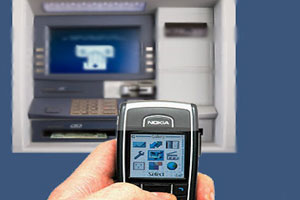

Mobile banking brings pleasure as well as pain because of the dangers mentioned hereof–


1. Information in Mobile devices is as vulnerable as in computers

It’s a well known fact that feeding extensive private information in public computers is dangerous. So is the case in mobile devices that act as tiny computers. “Mobile banking apps are connected to wireless networks, and these networks are inherently insecure as they broadcast their messages into the open air,” said Ron Vetter, co-founder of Mobile Education LLC and member of IEEE Computer Society.

2. Having a Password is necessary

Using your phone or device without password is like leaving your home unlocked while you are away. It enhances the chances of misuse, if you ever lose your phone. To ensure protection of your bank information, a complicated password is most desired. Without proper security measures like password, anyone can log into your app and get access to your bank details. Passwords might not be able to save you entirely from mobile info theft but would at least increase your chances of survival.

3. Never allow your device to auto-save password

Allowing your device to auto-save your password is like having no password at all. “One should never allow apps to remember usernames and/or passwords,” said Ron Vetter. The information becomes easily available to anyone who can lay a hand on your mobile or device if the username and password is already saved.

4. Resist using shared devices
Using shared devices for mobile banking increases the chances of losing valuable account information. Make sure that other users are not surfing high-risk sites as it enhances the probability of users downloading key-logging software onto your device and hence compromise your mobile banking session.


5. Depositing check with the help of camera and banking app

Banks try not to provide instant funds to those who deposit checks remotely with the help of a camera and banking app. The time taken to release funds when a check is deposited in ATM or bank is much less than time spent waiting for funds when you provide check via banking app. This is a measure to protect banks against fraud.


6. Download apps directly from bank’s website

There are a lot of fake apps on the run and using one of them may make you lose important information and eventually detach you from your money. Just because an app is downloaded from an app store does not ensure it authenticity. “Consumers tend to assume that just because an application is on an app store, it’s been heavily vetted by either Google, Apple or otherwise,” said Doug Johnson, vice president of risk management at the American Bankers Association.


7. Some devices are more prone to viruses than others

“In the fourth quarter of 2012, 97 percent of all of the malware released into the mobile environment was targeted against Android,” said Julie Conroy, a research director for Aite Group. Android has been a current favourite of developers of malware viruses since most other brands are not immune to viruses. Smart phones are more susceptible to viruses and hence more prone to losing valuable banking information.


8. Use storage cards to save bank details

Never save sensitive information directly in your phone and instead use storage cards. Most of the time, your phone might save information even after you have cleaned its memory. Try and use a program that will completely clean your device especially before you discard or resell your mobile.


9. Always update security apps

Do not ignore notification about security updates since it is most essential in case you have confidential information saved in your device. “Sometimes those updates include security updates, and you want to make sure you have the latest and greatest version of the whole app,” Julie Conroy said.


10. Strong network means stronger security

The probability of losing messages or information in transit is much higher when operating network connectivity is low since mobile apps broadcast data into open air. While doing mobile banking, make sure you are in a strong network service range.


Source -

Avoid These 10 Biggest Risks Of Mobile Banking:

'via Blog this'

Wednesday, September 18, 2013

Word of Mouth Referrals - Advice by David M. Ward


David M. Ward Esq. has this to say on Word of Mouth Referrals for Lawyers:


I saw a movie last weekend about an ethnic restaurant on the brink of bankruptcy. The manager met a quirky man, driving a taxi, who claimed to have been a great chef in the old country. Desperate to turn things around, he hired the man and crossed his fingers.
Turns out the chef really was good and business started to pick up.
One customer, an older woman, told the manager she loved the food and
would tell everyone about the restaurant. Her husband added, “. . .and she
knows everyone”.
Apparently, the woman did know everyone because the restaurant suddenly
got very busy. When a food critic gave the place a glowing review, there
were lines around the block, two hours before the place opened.
The woman was a connector. She was influential. And because she knew
a lot of other influential people, if she thought you were good, the world
would quickly hear about it.
What if you had a client like that, a connector who really loved what you
did for them? Before you knew it, word of mouth referrals would bring you
a waiting room full of new clients.
The thing is, people don’t wear a sign to identify themselves as a connector.
It could be anyone. It could be that unassuming older lady sitting in your
waiting room right now. If she likes you, your practice is made.
Okay, you may never have a client like that. Or, you may have someone
next week. So you do a great job for everyone, because you never know
who they are.
Yes, I know you would do that anyway. Because it’s the right thing to do
and because it’s who you are. You don’t treat big shots any differently
than regular folks.
Here’s the thing. Regular folks can also bring you a lot of business. They
may not be connectors who can tell the world about you, but they can refer
you a new client, and that client can do the same.
I often took small, unprofitable cases. I didn’t make any money on those
cases but my business model was based on serving clients, it was not
based on the viability of any one case. I helped my clients with small cases
and they came back with big ones.
In a sense, every client is a connector. You may never get a five star review,
there may never be a two hour line to get into your waiting room, but treat
everyone right and you will have a never ending supply of new business.


David M. Ward

Monday, February 21, 2011

Words of Advice for law aspirants - News From TOI

NAGPUR: Supreme Court judge Vikas Sirpurkar on Saturday called on lawyers and students to become research oriented to succeed in today's fast changing world. He was speaking at the late Vijay Bhonde memorial guest lecture on the premises of Nagpur bench of Bombay High Court. The lecture was part of Dr Babasaheb Ambedkar Law College's ninth Justa Causa festival.

SC judge Ashok Ganguly, Nagpur University vice chancellor Vilas Sapkal, former NU law dean Thrity Patel and principal Vibha Mahajan shared the dais.

"Merely wearing black coats and tearing into a witness or arguing with judges is not law practice. Doing continuous research on various laws and judgments is good practice," Sirpurkar said. Commenting on the duties of law aspirants, he said today's students had great potential. "Law is changing everyday. Till recently, we had never heard of monopoly legislation, or that waves can also become someone's property."

Sirpurkar, who is an alumnus of Dr Ambedkar Law College, urged teachers to review the verdicts delivered by judges and explain them to students. "After we deliver a verdict, the lawyers don't argue as our decision is final. But for teachers, any decision should not be the final verdict. They should dissect the verdicts like a surgeon examines his patient. If teachers start accepting everything the courts say, the law would stop developing," he warned.

Recalling the old days, he lauded former chief justice of India Vivian Bose's efforts to develop law in the country, terming him as a beacon. "He was like god for us. But his simplicity always inspired me. His rulings were landmark and crisp, and are cited till date. There was no scope for confusion in his verdicts. When he was presiding over, he used to deliver judgments based on his interpersonal skills and used to convince litigants."

Citing justice Bose's ruling in Vira Singh case, the former Nagpur bench judge said he protected the rights of the common man. "Had he been living today, he would have vociferously pursued duties in jurisprudence. We must all follow our fundamental duties," he said, revealing that justice Bose was also a big magician and used to undertake shows in schools.

Justice Ganguly, who is presently hearing India's biggest scam case - 2G Spectrum scam - involving former telecom minister A Raja, also deliberated on justice Bose's judgments. Justice Ganguly said that verdicts delivered by justice Bose were remarkably modern and protected the common man.

Terming law as an important tool for social engineering, Ganguly, who was formerly chief justice of Orissa High Court, praised the efforts of late Bhonde, who was vice principal of Dr Ambedkar Law College, for taking law from the confines of four walls to daily life. "Today, rule of law has become rule of life, and persons like late Bhonde made pioneering efforts in this direction."

He described Nagpur as the city of legal lights. 


Read more:
 Research must for lawyers, students: Sirpurkar - The Times of India http://timesofindia.indiatimes.com/city/nagpur/Research-must-for-lawyers-students-Sirpurkar/articleshow/7530686.cms#ixzz1Ec04t9Ys