Pages

Showing posts with label India. Show all posts

Saturday, March 10, 2018

Plea before Supreme Court to declare Muslim Polygamy and Nikah-Halala as criminal offences


A mother of three who was divorced twice through instant triple talaq has approached the Supreme Court to declare polygamy and Nikah Halala as unconstitutional among Muslims.

Earlier, BJP leader Ashwini Upadhyay had filed a plea seeking a complete prohibition on polygamy and Nikah Halala for violating fundamental rights of Muslim women.

One of the earlier such pleas heard and decided by the court was that of Shayara Bano who had approached the apex court to declare triple talaq as a violation of gender justice. A five-judge bench had declared instant talaq to be an un-Islamic practice and struck it down.

Sameena Begum was first married in 1999 and she produced two sons. After repeated abuse and a consequent police complaint, she was given triple talaq. She was forced to marry again but to an already married man. After she got pregnant again, she was given triple talaq over the phone after a trivial argument.

Now, Sameena lives alone with her three children. She said she has filed the PIL not only for herself but also for others who have suffered the same plight.

She requested the court that Section 2 of Muslim Personal Law (Shariat) Application Act, 1937, be declared as arbitrary and violating Articles 14, 15, 21 and 25 of the Constitution, insofar as it seeks to recognise and validate polygamy and Nikah Halala.

It has also requested the court to ensure that provisions of the Indian Penal Code, 1860, are applicable on all Indian citizens. The plea also sought recognition that "triple talaq is a cruelty under IPC Section 498A, Nikah-Halala is rape under IPC Section 375, polygamy is an offence under Section 494 of the IPC".

"The concept of polygamy was allowed in this verse (Quran) because of utmost concern for the welfare of women and orphans who were left behind in the battle. It is pertinent to mention that by no means it is a general licence to Muslims in present times to marry with more than one woman. Besides it puts onus on them to treat the additional spouses justly, which is admittedly a difficult task," the plea said.

Bearing a similarity with the triple talaq plea, the plea too has cited international laws and countries where polygamy has been prohibited.

It also noted that polygamy is totally prohibited in Tunisia and Turkey. "In countries like Indonesia, Iraq, Somalia, Syria, Pakistan and Bangladesh, it is permissible only if authorised by the prescribed authority," it said.

Sameena said, “Equality should be the basis of all personal law since the Constitution envisages equality, justice and dignity for women."

​The petitioner contended that though it is illegal for Muslim women to marry a second time during subsistence of first marriage but "there is no requirement for Muslim husband so that the permission of the first wife is to be taken before contracting second marriage".

Source:  News18.com

Friday, June 9, 2017

Lack of judicial reforms pulls down India's ranking - Times of India

A World Bank assessment on the performance of India on ease of doing business shows the largest democracy lags behind many of the sub-Saharan African countries and the east Asian nations in `enforcement of contract' largely due to the inefficient judicial system which has failed to keep up with the technological revolution that has changed the pace of the justice delivery across the world.

Giving the example of Rwanda, it says the African country has implemented the integrated electronic case management system across all courts which allows for an automatic registration of lawsuits, electronic organisation and scheduling of cases and automated claims processing. Many of the sub-Saharan African countries have done better than India, which has failed to implement crucial judicial reforms when it comes to implementing the electronic case management system. Some of the basic services such as summons are still being served using the antiquated practice. The law on adjournments is not followed in 50% of cases across courts while there is hardly any adherence to the timeline fixed for resolution of disputes, as per the findings.

An evaluation of the court structure and proceedings by the World Bank, while ranking countries on ease of doing business in its 2017 report, has painted a very grim picture for India compared to many of the sub-Saharan African countries that have done better by adopting a set of good practices, including case management, court automation and alternative dispute resolution--some of the parameters which resulted in India being ranked overall 130 among 190 countries.

The report refers to lack of electronic case management system for lawyers and judges in the courts dealing with commercial disputes in Delhi and Mumbai. There is no provision for pre-trial conference in these courts. "In addition, as the complaints cannot be filed electronically be fore the competent court and the documents cannot be served electronically , we were not given any points on that front," a government task force has observed on why India has been ranked so low in the World Bank's ease of doing business. In India, as far as commercial disputes are concerned, the complaint cannot be filed electronically in the absence of a platform within the competent court.It is not even possible to carry out service of process electronically for claims filed before the court. Only the court fees can be paid electronically and the judgments can be accessed online.

Source-
http://m.timesofindia.com/business/india-business/lack-of-judicial-reforms-pulls-down-indias-ranking/articleshow/59010558.cms

Tuesday, March 21, 2017

A silent Regular Blood donor .... Guess who?

40 ವರ್ಷಗಳಿಂದ ಪ್ರತಿ ಮೂರು ತಿಂಗಳಿಗೊಮ್ಮೆ ರಕ್ತದಾನ ಮಾಡುತ್ತಿರುವ ಸುಪ್ರೀಂಕೋರ್ಟ್ ಮುಖ್ಯನ್ಯಾಯಾಧೀಶರು..!

Since 40 years, every three months the Hon'ble Chief Justice of India has been donating blood.

ನಮ್ಮ ಸಮಾಜದಲ್ಲಿ ರಕ್ತದಾನ ಮಾಡುವವರ ಸಂಖ್ಯೆ ತುಂಬಾ ಕಡಿಮೆ ಎಂದು ಹೇಳಬಹುದು. ಯಾರಾದರೂ ತಮ್ಮ ಕುಟುಂಬ ಸದಸ್ಯರು, ಬಂಧುಗಳು, ಸ್ನೇಹಿತರಿಗೆ ಅವಶ್ಯಕತೆ ಇದ್ದರೆ ಮಾತ್ರ ರಕ್ತದಾನ ಮಾಡುತ್ತಾರೆ. ಯಾರೋ ಕೆಲವರು ಇದಕ್ಕೆ ಭಿನ್ನವಾಗಿ ಯೋಚಿಸುತ್ತಾರೆ. ಅಂತಹ ಕೆಲವರಲ್ಲಿ ಅವರು ಒಬ್ಬರು. ಆದರೆ ಅವರು ಸಾಧಾರಣ ವ್ಯಕ್ತಿಯಲ್ಲ. ಭಾರತದ ಸರ್ವೋಚ್ಚ ನ್ಯಾಯಾಲಯದ ಮುಖ್ಯ ನ್ಯಾಯಾಧೀಶ. ಅಂತಹ ಅತ್ಯುನ್ನತ ಪದವಿಯಲ್ಲಿದ್ದು ಸಹ ರಕ್ತದಾನ ಮಾಡುವುದನ್ನು ನಿಲ್ಲಿಸಿಲ್ಲ.

Not everyone in India willingly or of his own accord consents for blood donation, unless the life of a friend or relative is at stake.
But the Chief Justice of Supreme Court o India, has set an example for all of us.

ಎಷ್ಟೇ ಉನ್ನತ ಸ್ಥಾನದಲ್ಲಿದ್ದರೂ ಪ್ರತಿಯೊಬ‌್ಬರು ತಮ್ಮ ಕನಿಷ್ಠ ಸಾಮಾಜಿಕ ಜವಾಬ್ದಾರಿಯನ್ನು ಮರೆಯಬಾರದೆಂದು  Chief Justice ಜಗದೀಶ್ ಸಿಂಗ್ ಹೇಳುತ್ತಾರೆ.
He says everyone should have a Basic or Minimum sense of Social Responsibility irrespective of his position  or status in life.

ಇವರಿಗೆ ವಯಸ್ಸಾದರೂ ಸಹ ರಕ್ತದಾನ ಮಾಡುವುದನ್ನು ನಿಲ್ಲಿಸಿಲ್ಲ.  ಇವರನ್ನು ಎಲ್ಲರೂ ಆದರ್ಶವಾಗಿ ತೆಗೆದುಕೊಂಡರೆ ಎಷ್ಟೋ ಜನರ ಬದುಕಿನಲ್ಲಿ ಬೆಳಕು ತಂದವರಾಗುತ್ತವೆ.

Despite his age and attaining the highest Constitutional Position CJ Jagadish Singh Kehar has not stopped Blood Donation. He is a role model for everyone.

ಇನ್ನೊಂದು ವಿಷಯ… CJ ಜಗದೀಶ್ ಸಿಂಗ್ ಹಾಗೆ ರಕ್ತದಾನ ಮಾಡುವುದನ್ನು ಯಾರಿಗೂ ತಿಳಿಸಿರಲಿಲ್ಲ.

This fact came to light just recently when the CJ had been to AIIMS Delhi to donate blood as usual, and was not known in thepublic realm all these years.

Source - https://kannada.ap2tg.com/supreme-court-chief-justice-participating-in-blood-donations-from-40-years/

Wednesday, February 22, 2017

On ISRO achievements - Proud being Indian.

A social media Forward :

Credits to the Author.

As usual the whites trolled India's achievement of launching 104 satellites but they were put in place by one amongst them:

Volsted Gridban:
Send up all the rockets you want, you still don't have a pot to p!ss into. End your poverty first.

Gobshyte:
Why all the fuss, its easy to put a satellite into space ...I mean its hardly rocket science is it?

Matt Daley:
No money to carry on the struggle against public defekation, cholera, starvation and endemic street begging, then?  Ah well, nice to see India has its priorites right once again!

peter.aremone:
Dear Condescending Brits,

It is great to see you loathing in hatred against India's achievements, not too long ago you took pride in calling yourself the No.1 Enslaver of the planet & built your ENTIRE wealth on the massacre & loot of tens of millions of Indians. Turning the richest, most educated nation on Earth back then into a cesspool of poverty, death, hunger & illiteracy while fattening yourselves & your children.

Now without colonizing any nation, India is back in the game purely by her own merit & hard work while you, the British are stuck with your school going daughters being groomed & chewed like chicken kebabs by Pakistani gangs whom you prefer to appease while abusing India & Indians who are the highest educated people in UK & also the ones who qualitatively pay the most tax & are least likely to live on welfare than ANY other ethnicity including the White ethnicity.

Regarding Aid to India, if India merely asks back its wealth, Britain will have to toil for 50 years merely to pay India back its stolen wealth (without interest), yet India has told UK to its face to stop giving aid which mostly goes to shady criminal activities by Christian missionaries.

http://www.telegraph.co.uk/news/worldnews/asia/india/9061844/India-tells-Britain-We-dont-want-your-aid.html

As India rises Scientifically & Technologically, Britain has fallen way beneath the feet of Germany in terms of Technology & Science, a nation that was razed to the ground after losing WW2 (rightly so).

India's space program helps alleviate poverty by being the only profitable space program on Earth currently as well as launching people oriented satellite projects that help poor farmers, poor fishermen, miners, students, scientists, professionals.
The materials engineering innovations by India's ISRO (Indian Space Research Organization) provides state of the art Prosthetic limbs FREE OF CHARGE to millions of Handicapped human beings not just in India but other poor nations as well - while UK sits on its fat posterior with an ever fattening population whilst a failing economy with NO space program at all to speak of to spearhead innovation & STEM education in UK.

Remember dear Brits, India's TATA is the largest private employer in the UK & India is the 3rd largest investor in UK - India is actually providing jobs to millions of Brits whilst NOT looting you, NOT plundering you, NOT colonizing you DESPITE you having done worse on tens of millions of Indians.

If you have any self-respect, you will congratulate India for its meritorious achievement & try do something yourself off it, or else it is better to be quiet & let others think you are not stupid than open your mouth & allay all doubts.

Sunday, March 13, 2016

In defence of a revolutionary - Reopening the trial of Shaheed Bhagat Singh and his team - IndianExpress


Eighty-five years after the hanging of Bhagat Singh, lawyers from India and Pakistan have joined hands to re-open, and overturn, the sham trial that led to his death.

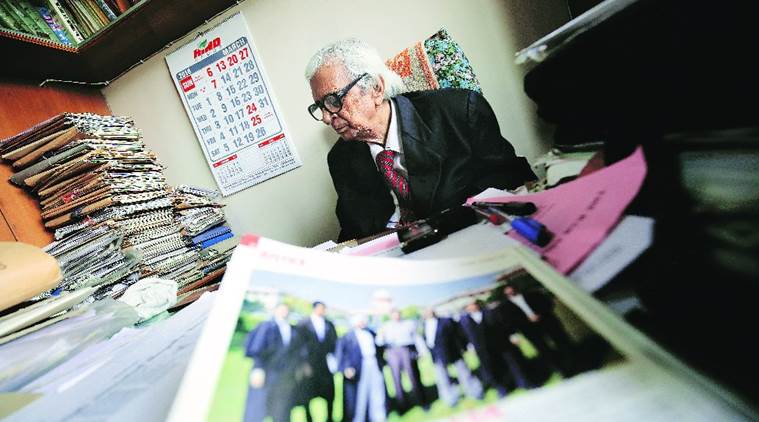
In a dark, poky room that constitutes his chamber in the new block of the Supreme Court, Delhi, Nafis Siddiqui, a 77-year-old criminal lawyer, has been preparing for a most unorthodox case for the last two years. 

As part of his research, he has been reading up on cases where verdicts have been upended after long periods of time. He cites the case of George Stinney, a young boy, exonerated 70 years after his death by a court in US (in 2014), that found he was denied due process. Siddiqui points out another relevant trial; the ongoing legal battle between the British government and victims of Kenya’s Mau Mau emergency, who are demanding compensation 50 years after the events. “When it comes to infringement of fundamental rights, a delay in the matter is of no consequence,” he says.
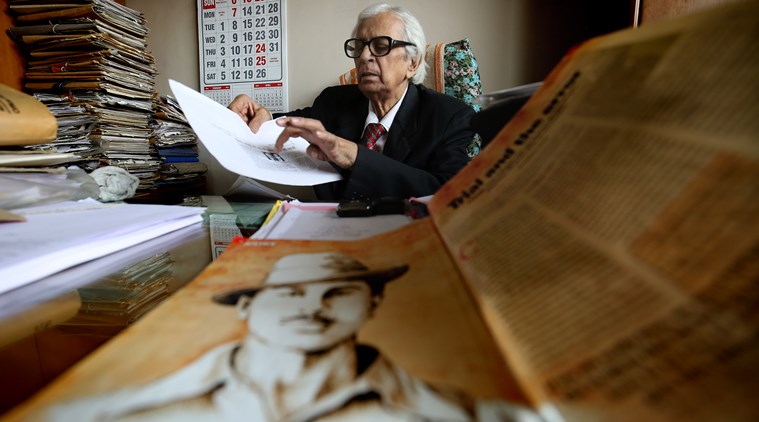


With loose-flowing white hair, thick-framed glasses and oversized black coat, Siddiqui is an idiosyncratic figure. He pulls out a thick brown folder marked “Bhagat Singh”, with whom he has grown to be familiar through history books and family lore — Siddiqui’s father-in-law, Hasrat Mohani, a freedom fighter, communist and poet, credited for coining the slogan, “Inquilab Zindabad!”, had a great influence on the revolutionary. “I mostly handle cases of murder, and this is clearly a case of political murder,” he says.
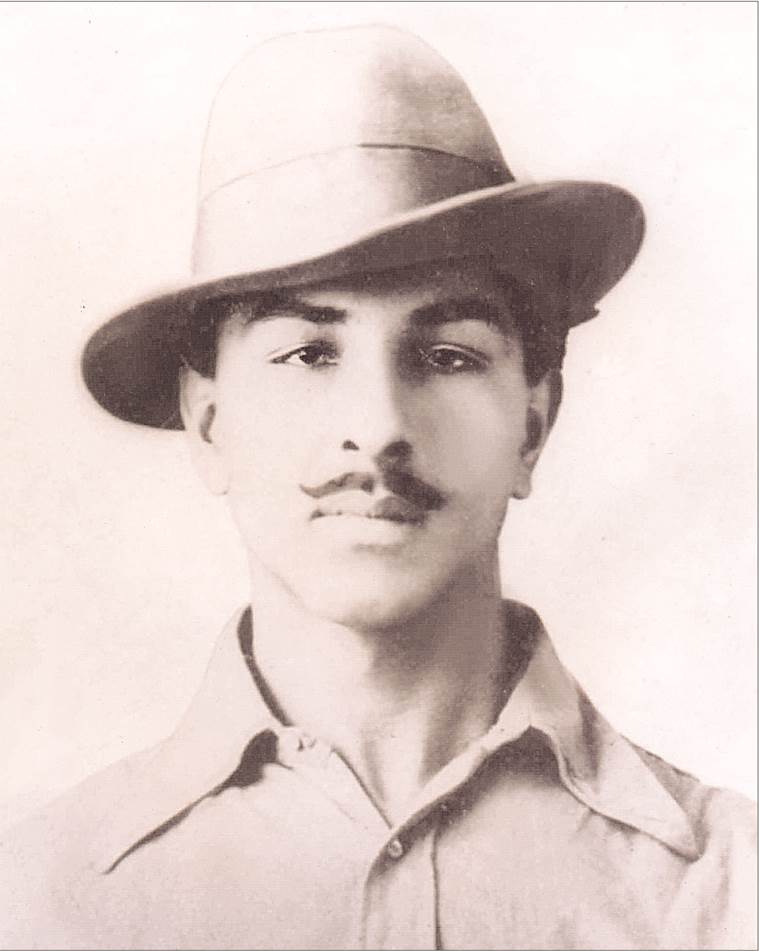


Eighty-five years after the hanging of Bhagat Singh, a lawyer from Pakistan is trying to pull off what is either an audacious attempt to change the course of history, or a fool’s errand. In 2014, Siddiqui was approached by Lahore-based Imtiaz Rashid Qureshi — who has been fighting a lone battle to prove the innocence of Bhagat Singh — to advise him on his case. Qureshi’s petition, which was filed at the Lahore High Court in 2013, seeks to reopen the case of the hanging of Singh and his compatriots, Sukhdev Thapar and Shivaram Rajguru, whose death anniversary will be celebrated on March 23 as Martyrs’ Day. In February this year, a two-member division bench in Lahore referred the case to a larger bench. For Qureshi, who argued that only a bench of three or more members could undo the decision of the three-member bench that awarded the death sentence in 1930, it was a moment of victory.

The first breakthrough came in 2014 when the court handed him a copy of the original FIR for the murder of British police officer John Saunders lodged at Lahore’s Anarkali police station in December 1928. The FIR does not name any of the three accused.
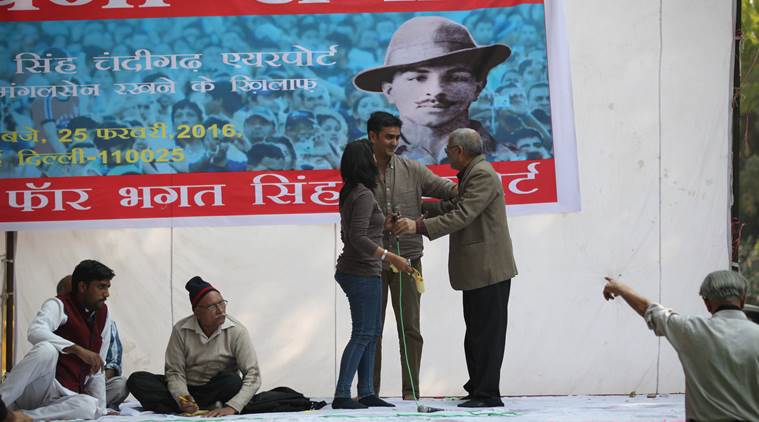


This is just one of the many discrepancies of the Lahore Conspiracy Case, which lasted for nearly two years and is universally recognised as a sham trial. As AG Noorani detailed in his book, The Trial of Bhagat Singh, from the lower court to the tribunal to the Privy Council, it was a judgment that represented a total compromise of the legal process.

The accused remained absent through the proceedings and remained unrepresented. Halfway through the trial, an Indian judge, deemed sympathetic to the accused, was removed from the tribunal. Many other rules of law were flouted. In a scathing editorial that appeared in April 1931, in the Marathi newspaper Janata, soon after the hanging, BR Ambedkar called out the hypocrisy of the British who manipulated the trial for political ends.
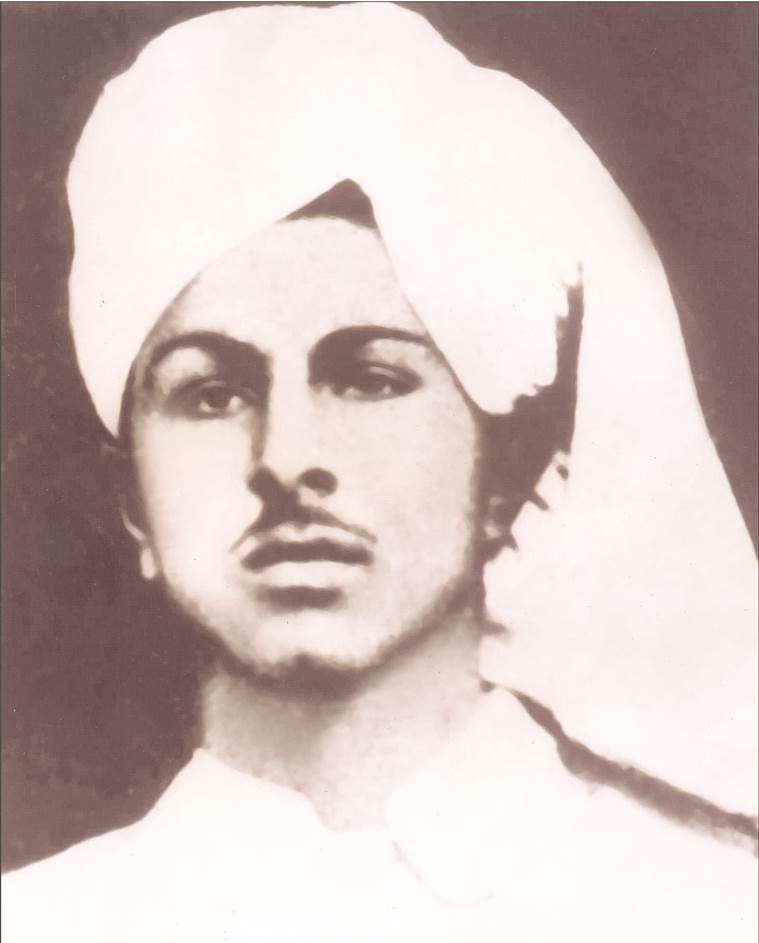


“We are demanding two things, that the British government, through the Queen, apologise to both our countries, and pay compensation to the families of Bhagat Singh, Rajguru and Sukhdev,” says Qureshi over the phone from Lahore. Loquacious and deeply committed to the cause, he calls himself a “lover of Bhagat Singh” and runs a memorial in his name, the Bhagat Singh Memorial Foundation. “This is a case that unites the two countries and it proves that Pakistan, an Islamic state, can also be liberal. Let’s not forget the Quaid-e-Azam was the only leader to have publicly defended him.” In a speech he gave in the Central Assembly in 1929, Mohammad Ali Jinnah had famously expressed his sympathy for the revolutionaries.

Qureshi’s pursuit has had a ripple effect in India. In Ludhiana, the descendants of Sukhdev Thapar have recently written to the Indian government, demanding a copy of the FIR and papers related to the judgment. Ashok Thapar, (a great-nephew, his grandfather was the younger brother of Sukhdev), who runs the Shaheed Sukhdev Thapar Memorial Trust, says, “We want government support to go to Lahore and pursue this case, or we will file an RTI. As his blood relations, we have a claim.”
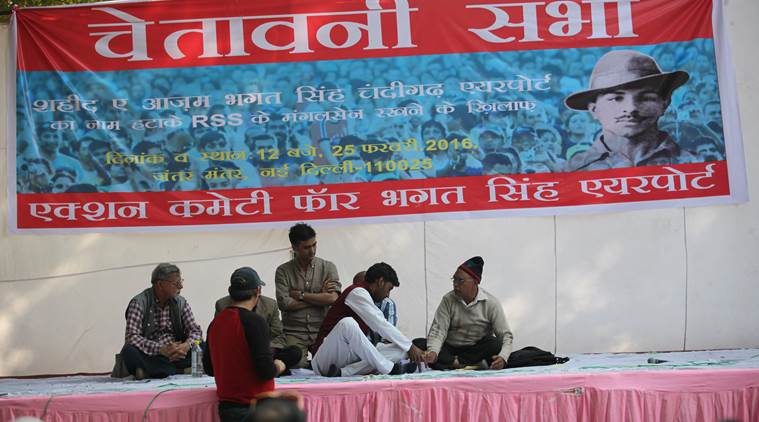


More than perhaps the verdict, the reopening of the trial is crucial for another reason. There is renewed hope that the court will order the release of about 164 files related to the case, which are with the Punjab Archives in Lahore. They have been treated as “sensitive”, and no historian or researcher has ever been allowed to access them, says Ludhiana-based Jagmohan Singh, a researcher on Bhagat Singh. He also happens to be Bhagat Singh’s nephew, born to his sister Bibi Amar Kaur. But, unlike the sustained campaign around the declassification of the Netaji files, these files have been neglected. Yet, they are a crucial part of setting the record straight.
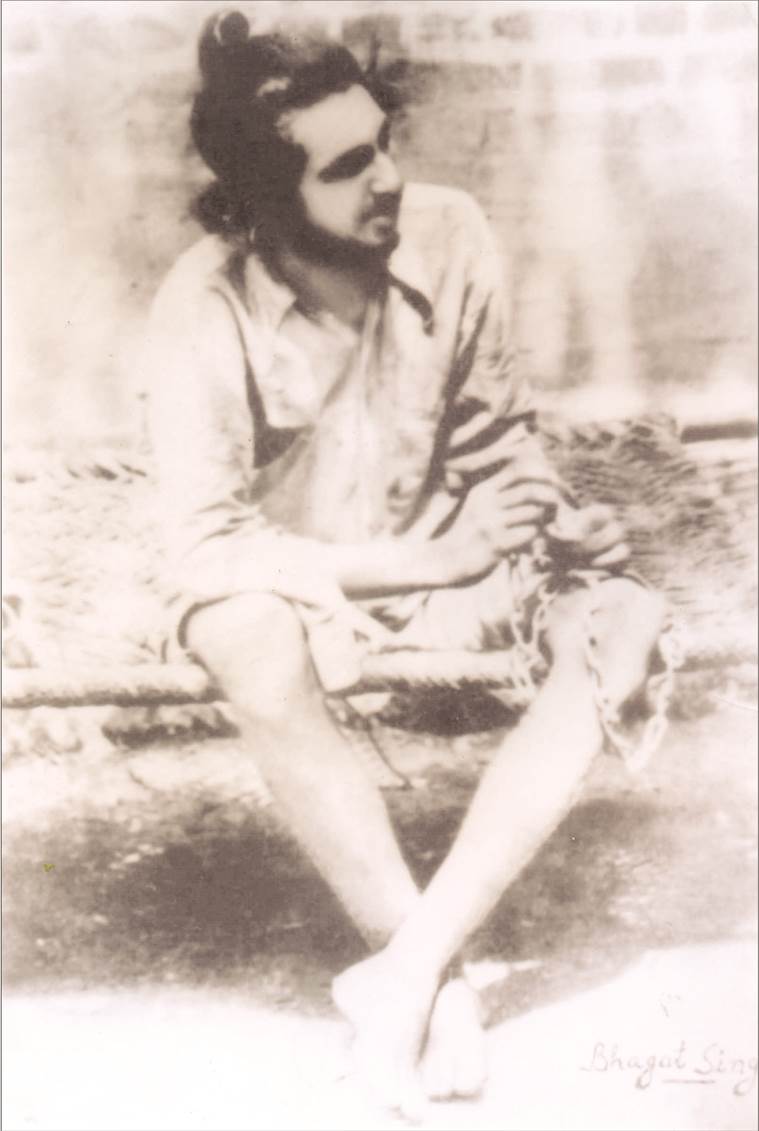


“The trial may or may not change history, but it’s the right of the people to know what happened, and those files will help us get there,” says Shantanu Rajguru, a great-grandnephew of Shivaram Rajguru. The family lives in Pune and is currently putting together a biography on the revolutionary. It was Rajguru, known as the marksman of the group, who fired the shot that killed Saunders. But Rajguru, like Sukhdev (who was in charge of coordinating the operation to avenge the death of Lala Lajpat Rai), has been reduced to a footnote in history, believes Shantanu. The descendants of Sukhdev believe that the retrial should not be held in the name of Singh alone.

*****
Apart from the context of historicity, the trial is significant as a measure of the democratic struggle in Pakistan being led by the civil society. The effort to reinstate Bhagat Singh as an icon has gathered force in recent times, as he has emerged as a symbol for the secularists in their battle against illiberal forces. Singh belongs to the pantheon of heroes of the Indian subcontinent. He is venerated in Punjab where he was born. “The PIL is an important political and historical development in a country and a region where history is often distorted in textbooks, held hostage to nationalist expediencies and heroes like Bhagat Singh are simply whitewashed or relegated to a footnote,” says Raza Naeem, a social scientist and activist from Lahore, over an email interview.


While there is no official celebration of his martyrdom day in Pakistan, every year, on March 23, there is a gathering of activists at Shadman Chowk, next to Lahore Jail, where he was executed. Since 2001, there has been a movement demanding Shadman Chowk be renamed Bhagat Singh Chowk. The government agreed a few years ago, but capitulated when Islamist groups objected to the icon on grounds of his religious identity. In a conciliatory move last year, the government announced a package of Rs 8 crore, for the restoration of his ancestral house in Faisalabad district.

“I have attended the annual gathering at the chowk for a few years and every year, the movement has grown,” says Haroon Khalid, Pakistani author and journalist. “It is now part of the broader debate that seeks to widen the horizons of Pakistani nationalism by incorporating non-Muslim heroes as well. Another interesting dynamic of this movement is that it also comes at a time when the Pakistani state actively wants to re-project itself as a liberal secular state. There has been particular focus on the protection and promoting of Sikh heritage in the country. Bhagat Singh is seen in that broader framework of this Sikh heritage,” he says.

*****
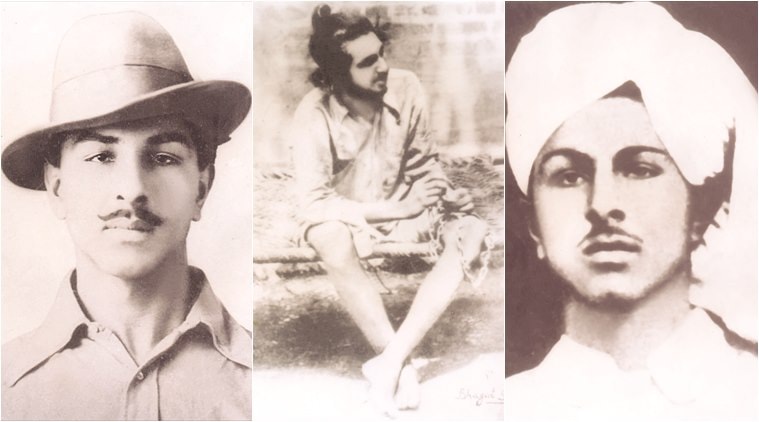

(The other aspects touched in the original article are not subscribed to or agreeable with me. It would be a narrow approach to stifle the Patriotic actions of the Revolutionaries under the Colonial Rule to a set of political isms. It is also equally wrong and disruptive to equate those Revolutionaries in the real sense to the present ongoing events involving a  few misguided, politically motivated individuals.)

SOURCE - 

http://indianexpress.com/article/india/india-news-india/freedom-fighter-bhagat-singh-inquilab-zindabad-supreme-court-nafis-siddiqui-george-stinney-hasrat-mohani-in-defence-of-a-revolutionary/#sthash.WNn5MgTv.dpuf

Monday, February 1, 2016

Draft Rights of Transgender Persons Bill, 2015 released - PRSIndia

Ministry of Social Justice and
Empowerment released the draft Rights of
Transgender Persons Bill, 2015 in January
2016.

 The draft Bill seeks to ensure overall
development and welfare of transgender persons.
A transgender person is defined as a person whose gender does not match with the gender assigned to them at birth, irrespective of whether they have undergone sex reassignment surgery or hormone therapy, etc.

Key provisions of the draft Bill include:
 Certificate of identity: A certificate
indicating that a person is a transgender
person will be issued by a state level
authority, on the recommendation of a
district screening committee (comprising
District Magistrate, psychologist,
psychiatrist, representatives of the
transgender community, etc.). The
certificate may be used to indicate gender on official documents, like ration card and
Aadhaar card. Transgender persons will
have the option to identify as ‘man’,
‘woman’ or ‘transgender’ in all such cases.
 Rights of transgenders and duties of
government: The central and state
governments must take steps to ensure that
transgender persons enjoy right to equality,
Land protection from discrimination. The
government must also ensure that
transgender persons have accommodation,
protection from torture, etc.
 Health: The central and state governments must take steps to provide health facilities to transgender persons including separate HIV  surveillance centres, free of cost sex
reassignment surgeries, etc.
 Education: Educational institutions funded or recognised by the government will have to admit transgender students without discrimination, provide accommodation and necessary support.
 Employment: Public or private
establishments (including companies,
unions, factories, etc.) will be prohibited
from discriminating against transgender
persons in matters related to employment
including recruitment and promotion.
Further, transgender persons may be
declared a Backward Class so that they can
be entitled to reservation under the ‘Other
Backward Class’ category.
A private member Bill related to rights of
transgender persons was passed by Rajya Sabha in April 2015, and is currently pending in Parliament.

Thursday, January 29, 2015

Law ministry lists ways to reduce backlog - A Rehash of the same old Story?

Seems like an Old Read....
Would have helped if the previous Governments had given it a serious thought to Ramp up the Justice Delivery System in India.

From the Times of India dated:


The law ministry has drawn up a list of good practices followed by some of the high courts (HC) and circulated them recently to chief justices of all HCs to implement the same as part of a common action plan to bring down pendency of cases, particularly those which are older than five years.

Setting up fast track courts, designating a special day in a week for disposal of older cases and adopting a case flow management system are some of the measures the Centre has suggested to all chief justices of high courts to be adopted for reducing pendency.

The government has also highlighted best innovative initiatives undertaken in many other countries to address the backlog. Encouraging pre-trial proceedings by several countries prior to commencement of the trial, court performance measurement and monitoring and mandatory prior notice in civil cases are some of the initiatives suggested.

In the pre-trial proceedings, followed in some countries, a meeting is arranged in chambers between judge, counsel for accused, and the prosecution and specific issues of trial are narrowed down in order to save time.

Regular assessment and monitoring of performance of courts is an effective way to bring about improved efficiency, transparency and accountability in judicial system. The law ministry suggests this could be done by introducing measurement indicators based on globally accepted benchmarks such as leadership and management, court planning and policies, court resources, court proceedings and public trust and confidence.

The government has also suggested mandatory prior notice in civil cases that would help in speedy trials. For this it has mooted a provision similar to section 80 of the Civil Procedure Code (CPC) for all categories of civil cases.

Section 80 of the CPC requires that a litigant must give two months' notice to the concerned party. The government thinks introducing this guideline by the court would help in curtailing unnecessary litigation.

Among the good practices followed by some of the HCs, the Allahabad HC has come in for praise for organizing Lok Adalats regularly during weekends. More than 3.22 lakh cases have been settled in 766 Lok Adalats in the state during March-June 2014. The largest HC in the country has also set up 171 reconciliation and mediation centres in districts with the help of the state government.

These mediation centres have settlement rates of 26%. The HC has also proposed to set up 81 fast track courts for trial of rape cases.

Sunday, October 5, 2014

Car Insurance Fraud Alert

Earlier this month, the IRDA issued a caution note to the public warning against such calls, especially those that pretend to be from the authority. “IRDA does not involve itself, directly or through any representative, in sales of any kind of insurance or financial products and does not announce any bonus for policyholders or insurers,” the notice said.

A car company representative in charge of its insurance operations in the city said that the culprits get details of vehicle owners from Regional Transport Offices. They zero in on policies nearing renewal period and call posing as vehicle company representatives. “We advise customers not to divulge details of their policies to such callers. There have even been instances of fake receipts been given,” the representative said.

“Your vehicle insurance is due on XX date. If you apply for XXX insurance instead of the existing one by this weekend, you will get 60 per cent off on your premium. This company has a tie-up with us.”

If you receive calls like this and do not cross-check with your vehicle company, you may fall prey to what even the Insurance Regulatory and Development Authority (IRDA) has claimed is an increasing number of spurious calls making “fictitious and fraudulent offers”. And they do not spare anyone — not even a former Chief Minister.

One such customer recalled how he nearly fell prey to the call. “I had even readied a cheque, but the vehicle company called me in the nick of time. The caller also did not follow up because I chose to stay with the existing policy, not the one they were offering,” he said.

The IRDA has time and again urged the public to remain alert against frauds or scams perpetrated by those who claim to be employees of the authority or other insurance companies and lodge a police complaint if they come across such calls. 


Karnataka state Joint Commissioner of Police (Crime) Hemanth Nimbalkar said that the police had not come across any such complaint so far. 

Source - The Hindu

Saturday, September 21, 2013

Contract Law: A Unique solution for corruption free politics - An Interesting Read


National development of a country is based on a sound social, economic and political system and it can sustain only when these systems are free from corruption, specially politics. Corruption is the synonym of politics today. Politicians have forgotten their legal and ethical duties towards the people and towards their nation. During elections they promise to provide a better government to the nation but after winning, they remain engaged in scams, corruption and other illegal activities. To curb these activities Indian Penal Code, Prevention of Corruption Act, etc have been enacted but all in vain because administration of law and justice becomes puppet before their muscles and money power. The Lokpal law was considered to be the ray of hope but its demand is still not fulfilled by the government. In this paper an attempt is made to present a totally different legal weapon to fight against corruption, not in criminal law but in civil law, especially in The Contract Act 1872. This Act has capability to be the best to eradicate corruption from Indian politics.
The landmark decisions of Hon'ble Courts in Balfour v Balfour, Carlill v Carbolic Smoke Ball Company and many more are in support of this view. Lokpal and other laws will be required no more if this Act is applied. Lord Stovel had said that contract is not a joke to pass time; it is that powerful medium by which we can explore the "Right to reject" and this right is the demand of present. The author through this paper is exploring the hidden power of the Contract, which can stop corruption in Indian politics and also suggesting the minor changes required to make this Act capable to be the best anti corruption law of India.

Introduction
The whole India is suffering from a disease popularly known as "corruption" and it is now on incurable stage due to its corrupt political system. Therefore removal of corruption from politics is the most important task (the giant task). Here the question is "what is corruption?" 
Corruption Corruption is an act which is done with intent to give somebody (including himself) undue benefit and which is inconsistent with the legal and official duties and the rights of people. It is understood an act against law; such as, giving money to get a government job or to get a judgment in one's favor etc. It includes bribery, supply of girls etc.
In a simple word corruption means to get work by means of illegal gratification. Politicians of India were not corrupt at the time of its transformation from slave country to democratic country .Mahatma Gandhi, Sardar Patel, Lai Bahadur Shastri etc. were some of them. But India is that unfortunate country where above great leaders took birth and presented a value-based ethical politics, is now facing the problem of corruption. As we all know that India has a system of Executive Parliament, therefore, Centre Government, State Government, their offices and even Public Corporations are not untouched by the untouchable disease of political corruption. This political corruption has polluted not only the government acts but also the industries, educational system, society and even the valued culture of India's age long civilization. 
According to the report of Transparency International's CPI of 2012, India's image on tackling corruption has not improved. In the list of most corrupt countries it is at 94th position out of 176 nations. Recent example is helicopter deal scam, while 2 G spectrum case, fodder scam (Chara Ghotala), uniform scam etc. are already well known scams. Thus corruption is that cancer like disease which has developed its poisonous roots in the nation's body and is killing its life. Contract In a general sense contract means a deal between two parties. In The Contract Act 1872 under section 2(h) it is defined as an agreement enforceable by law is a contract. When we try to understand it we find two phrases in this definition. The first is "enforceable by law" that means legal assistance and protection is available on dispute, while second is an agreement which is defined in section 2 (e). This section states that every promise and every set of promises, forming the consideration for each other, is an agreement.
Here we again find two key words in this definition.
The first is consideration which means something in return while another is promise which is defined in section 2 (b) and states that when offer is accepted it becomes a promise. Promise is also having two key words, one is offer and the second is acceptance. It is here not noteworthy that for offer and acceptance at least two parties are required. Section 10 of The Indian Contract Act 1872 says that these parties must be competent according to the Indian Majority Act 1875, and their agreement must be based on free consent with lawful consideration and for lawful object.
Contract Law:
How Capable to Fight Against Corruption in Politics Now the question arises that how Contract Law is capable to eradicate corruption from Indian politics. To understand it we have to look the essentials of contract, as prescribed in section 10 and in other provisions of ICA 1872. It can be presented as follows:
Competent Parties Offer and Acceptance. Not based on family or social relationship. Terms and Condition must be certain Received free consent of parties. Agreement must not be declared void by law. Consideration and Object must be lawful. Time and place must be certain. Analysis of Politics as Contract (during elections) Politics during elections is contract because it has all the features of contract, for this we analyze the politics during elections on the basis of essentials of contract required under section 10 and above mentioned description.
Offer in Politics during election Section 2(a) of Indian Contract Act defines it as When one person signifies to another his willingness to do or to abstain from doing anything, with a view to obtaining the assent of that other to such act or abstinence, he is said to make a proposal. Here at the time of election the contesting politician makes proposal/ offer to the people that he would give a fair and corruption free governance, employment, education, health facilities to the people if public cast vote in his favor and make him winning candidate. It is an express offer and communication of this offer is also completed by means of propaganda. Acceptance in Politics during election Section 2 (b) of this Act defines it that When a person to whom the proposal is made, signifies his assent thereto, the proposal is said to be accepted. Here when a candidate is won it means his offer was accepted by the people and in such a manner as prescribed by the offerer. It is notable here that, politician's offer was of general nature because it was given to the people. Rules regarding communication state that acceptance must also be communicated in such way as offer was communicated. But in Carlill v Carbolic Smoke Ball Company [1893] Q.B. 256 (C.A.)'s case the court decided that for general offer, communication of acceptance is not necessary.
Facts of this case in brief are as follows:
Carbolic Smoke Ball Co. manufactured and sold The Carbolic Smoke Ball by placing ads in various newspapers and offered a reward of 100 pounds to any person who after its contract influenza, colds, or any other disease. Carlill purchased and used it as directed but contracted influenza and made a claim for the reward. Carbolic Smoke Ball refused to pay and plead that the acceptance was not communicated by Carlill, The court held that a person who makes an offer may decline to require notice of acceptance if he or she wishes. To accept an offer, a person need only follow the indicated method of acceptance. If the offerer either expressly or impliedly intimates in his offer that it will be sufficient to act without giving notice of acceptance, performance is sufficient acceptance without notification. Therefore Co. was liable One may ask a question here that his election winning was caused by the votes of only a part of people not by the whole of population; thus, his offer was accepted only by a few people which cannot be identified so why should he be bound for all. It has two answers.
Firstly the people is a group and is one party and if majority of that group has expressed their intention by giving him votes more than other candidate, that must be considered unqualified acceptance. In this reference it is notable that if for acceptance, people's full voting be only considered than in same condition India cannot be called a democratic country in literal sense (i.e. government of people for people and by people) because here too the government is not formed "by the people" but by the majority of people e.g. the current UPA government is a result of votes of majority of people not by whole people so what about the people who gave vote to BJP or others. Therefore, his winning is acceptance from other party i.e. people of India.
Secondly the remaining people is stranger to consideration (that means beneficiary); therefore they also Section 2 (b) also states that A proposal, when accepted, becomes a promise.
The offer of that politician has been accepted by the people; therefore, it has become a promise. People's promise to give him vote (which was performed as he has been elected) and politician's promise to provide a fair and corruption free government (now it is his turn to fulfill the promise). Consideration in Politics during election As per section 2 (d) When, at the desire of the promisor, the promisee or any other person has done or abstained from doing, or does or abstains from doing, or promises to do or to abstain from doing, something, such act or abstinence or promise is called a consideration for the promise. This contractual requirement is also fulfilled in the situation because fair government is consideration for people while seat in election is consideration for that politician.
These considerations are not unlawful, immoral or opposed to public policy as per under section 23 ICA. Legal Relationship in Politics during election In the landmark case of Balfour v Balfour [1919] 2 KB 571 the court held that contract must not based on family or social matters like domestic arrangement, invitation for picnic etc. The facts of this case in short are that Mr. Balfour is the Defendant and Mrs. Balfour is the Plaintiff. The two lived in Ceylon and visited England on a vacation.
The plaintiff remained in England for medical treatment. The defendant has agreed to send her a specific amount of money each month until she could return. The defendant later asked to remain separated. Mrs. Balfour sued for restitution of her conjugal rights and for alimony equal to the amount her husband had agreed to send. Mrs. Balfour obtained a decree nisi and five months later was granted an order for alimony. The lower court entered judgment in favor of the plaintiff and held that the defendant's promise to send money was enforceable. The court held that Mrs. Balfour's consent was sufficient consideration to render the contract enforceable and the defendant appealed. In appeal it was finally decided that social agreements are not contract, intention to create legal relation is an essential element of a contract and in this case, there is no intention to create a legal relation. The question is, whether voting and contesting in election is social or family matter or a legal matter. Answer is that it is a legal matter based on creating legal relationship; therefore, this requirement is also fulfilled. In other words the court hereby not denied that political matters are based on legal relationship.
Competent Parties in Politics during election According to section 11. Every person is competent to contract who is of the age of majority according to the law to which he is subject, and who is of sound mind and is not disqualified from contracting by any law to which he is subject. It is beyond any doubt as voters age and contestant's age is already fixed which is 18 years or above. Parties must not be of unsound mind or disqualified by law under ICA. This requirement is also required for contesting election. Free Consent in Politics during election.
Under section 14 0f ICA it is defined as:
Consent is said to be free when it is not caused by-
1. coercion, as defined in section 15, or
2. undue influence, as defined in section 16, or 
3. fraud, as defined in section 17, or 
4. misrepresentation, as defined in section 18, or
5. mistake, subject to the provisions of sections 20, 21, and 22. 

Consent is said to be so caused when it would not have been given but for the existence of such coercion, undue influence, fraud, misrepresentation, or mistake. In election people cast their vote without any coercion, undue influence, fraud, misrepresentation, or mistake and The Election Commission of India does all efforts to make it free and fare.
Thus this element is also present in election process. Lawful Object and Consideration in Politics during election Under Section 23 of ICA it is provided that The consideration or object of an agreement is lawful, unless -
1. it is forbidden by law; or
2. is of such nature that, if permitted it would defeat the provision of any law or is fraudulent; or
3. involves or implies, injury to the person or property of another; or
4. the Court regards it as immoral, or opposed to public policy.
In each of these cases, the consideration or object of an agreement is said to be unlawful. Every agreement of which the object or consideration is unlawful is void. Here participating in elections is not unlawful, immoral or opposed to public policy. Not Declared Void by Law Participating in elections is not that type of agreement which is declared void by law Other Requirements All other features of a contract are also present in elections like certain terms and conditions, time and place etc.
The Indian Contract Act:
The Best Anti Corruption Law In the above mentioned facts we find that the whole election is nothing except contract. Therefore the author is of firm opinion that why election should not be declared a contract and applied The Contract Act. The question is that how will it work? As it is already discussed that politician promised the people for a fair government and people promised to vote for him so it is a promise. On the day of election people performed their part. The result of polling is its evidence. Now it is his turn to perform his part by fulfilling the promises made to the people. Here politicians breach contract and do nothing; therefore an action for breach of contract must be brought by the people after lapsing a reasonable time. The court on this can provide remedies available in The Contract Act 1872.
These remedies are-
1. Compensation for no fulfillment of promises: people should be awarded compensation from that politician who breached contract. Author's suggestion is that from the awarded compensation a part of it should be given to the complainant as cost of his efforts and remaining should be deposited in a welfare fund made for this purpose so that welfare schemes can be maintained. Collection should be according to the process of collection of arrears of revenue.

2. Perpetual Injunction on future participation: His remaining tenure should be terminated so that he could not continue. In another words "Right to Reject" can be introduced. Though it will be more than Right to Reject.
3. Quantum Merit: His salaries allowances and benefits should be minimized as per ratio of the work done.
4. Specific Relief for unperformed tasks: He should be compelled to perform the incomplete tasks for which he had availed grants, funds etc. If this happens, politicians will definitely deprive themselves from making false promises and misusing of public funds. It will certainly lower down the rate of corrupt activities. No FIR, no police, no prosecution, no imprisonment and no new law still the corrupt and corruption will be stopped. 

Suggestions or Things Needed to do Few changes as well as arrangements will be required like:
1. Declaring elections a "contract". 
2. Creating right to reject in the form of perpetual injunction.
3. Setting up of election courts to dispose these cases on fast track. This can be done by giving this power to the High Courts (by making a separate Bench) or Election Commission of India. Lower courts should be barred to exercise this jurisdiction.
4. All procedure should be under judicial review of Supreme Court.
5. Complaint procedure should be strictly regulated to stop its misuse.
6. Compensation or specific relief on the principles of Specific Relief Act 1963 should be given.
7. Heavy compensation should be imposed so that it will be a lesson for the new comer in politics.
8. Legal awareness program should be introduced regarding this issue.
9. Public notices of their breach of contract and perpetual injunction on his contesting in elections should be given so that everyone can take lesson.
10. A guilty of this breach must be stopped permanently in all types of elections.
11. Even he must be debarred in public employment.
12. Criminals as well as undertrials must be declared legally disqualified for this contract (in contesting).

We can hereby say that one breach of promise means end of political life permanently Conclusion In the case of Darlimpal v. Darlimpal (1811) 161 ER 161, Lord Stovel rightly said that contract is not a joke to pass time. Its provision can resist corruption. Corruption is a communicable disease which kills of the spirit of substantial development .Basically the whole election system is nothing but a contract so after declaring election as a contract and applying the Indian Contract Act, 1872, this can give far better result than "Right to rejectâ€. Politicians will definitely deprive themselves from making false promises, misleading of public and misusing of public fund corruption rate will certainly decrease.

This scheme to impose contractual obligation is required to derogate the deceptive promises and fairy tales which is generally pronounced by our leaders in fun. In search of effective anti corruption tools, it will turn the demerits of election system into merits as well as corruption related to the politics. There is no need of Lokpal, ICA is competent to be a unique solution for corruption free politics. It was well said by The American scholar G.Edward Griffi that- "To oppose corruption in government is the highest obligation of patriotism".
Therefore start opposing corruption by making it contract.

List of key words:
ICA: Indian Contract Act 1872
KB: Kings Bench
CPI: Corruption Perception Index
Q.B: Queen's Bench
C. A.: Court of Appeal
ER: England Reporter
R.S. Jha*
*Research Scholar,
Email: radheyshyamjha@gmail.com

References:
1. Singh, Avtar, Contract & Specific relief, Eastern Book Company Lucknow, 2010
2. Kapoor, ND, Elements of Mercantile Law, Sultan Chand & Sons Educational Publishers, New Delhi, 1997
3. Subbarao, G.C. Venkat, Jurisprudence & Legal Theory (translated by Tej Prakash), Eastern Book Company Lucknow, 1997 4. Paranjape, N. V., Jurisprudence & Legal Theory, Central Law Agency, Allahabad, 1997

Websites:
www.thehindu.com
www.lawnix.com
www.shareyouressays.com
www.essay-sanjeet.blogspot.in
www.lawnotes.in
www.advocatekhoj.com
www.goodreads.com

Wednesday, December 28, 2011

Top 10 Indian bestselling business books of 2011! - From http://trak.in

Top 10 Indian bestselling business books of 2011!:

'via Blog this'


A list of the top 10 bestselling books of 2011 in India would typically include the well known names of Chetan Bhagat, Amish and their likes. But a list of bestselling books in the business category is rare. Let’s take a look at the Top 10 business bestselling books in India in 2011, with a few picks from the Business Standard list of the same title.

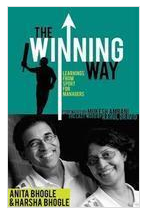
The Winning Way

By Harsha & Anita Bhogle
image17 Top 10 Indian bestselling business books of 2011!A famous sports commentator (who is himself an IIM-A grad) and his IIM-A grad wife join forces to write a book about how businesses can take valuable lessons from sports about winning, loosing, combating and rising above from failure. Interestingly this book also marks 300 training workshops for ‘The Winning Way’ that the Bhogle couple have led.
ISBN - 9789380658322

Corporate Chanakya

By Radhakrishnan Pillai
image18 Top 10 Indian bestselling business books of 2011!The last few years have regenerated an interest in ‘Arthashastra’ written by the great mathematician, administrator and statesman Chanakya. R Pillai has presented his version of the simplification of the sutras, mantras and trade secrets that Chanakya has explained in his original epic. More like a corporate guide, Pillai’s simplified version gives tips on management, leadership and training.
ISBN - 9788184951332


The Habit of Winning

By Prakash Iyer
image19 Top 10 Indian bestselling business books of 2011!Here’s one more IIM-A grad who has jumped on the bandwagon of penning experiences based on his 25 year corporate career in which he sold everything from soaps to diapers. ‘The Habit of Winning’ is a mix about inspirational stories and real life incidents. From the Cola Wars to Michelle Obama’s brand management, these stories aim to inspire you to be a winner in everyday life.
ISBN - 9780143068280


The TCS Story & Beyond

By Ramadorai
image20 Top 10 Indian bestselling business books of 2011!It’s amazing to read a book written by a man who has maneuvered his way through an organization for almost 40 years. From the days of Y2K when TCS expanded its client base to the IPO of TCS in 2004 to the potential merger with Tata Burroughs to the large scale recruitments drives that TCS is now undertaking, Ramadorai narrates a great journey that you ought to be a part of.

ISBN - 9780670084906


I Have a Dream

By Rashmi Bansal
image21 Top 10 Indian bestselling business books of 2011!An MBA graduate from IIM-A herself, Ms. Bansal has already authored two bestselling books on entrepreneurship previously. While her first book talked about MBA graduates who jumped on the entrepreneurship bandwagon, her second book talks about non MBA graduates, her recently launched book ‘I Have a Dream’ talks about 20 idealists who become the change they want to see in the world.

ISBN - 9789380658384

Unusual People Do Things Differently

By TGC Prasad
image22 Top 10 Indian bestselling business books of 2011!This book makes for an amazing read because it collects the success stories of 65 varied and interesting people – from famous people like Azim Premji and Mother Teresa to a common realtor, a CA, an attorney and a sports coach amongst many others. The common denominator that Prasad points out in all these people is their ability to think out of the box and accomplish extraordinary things.
ISBN - 9780143416753


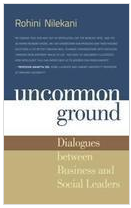
Uncommon Ground: Dialogues With Business And Social Leaders

By Rohini Nilekani
image23 Top 10 Indian bestselling business books of 2011!A philanthropist and a social activist by profession, Nilekani has penned this book based on interactions between business magnates and social leaders. Based on a TV show which she hosted in 2008, the book explores 8 major themes of polarization between business and voluntary social sectors. Capturing rare conversations between industry giants, Nilekani helps her readers realize that social and corporate developments inadvertently go hand in hand.
ISBN - 9780670085620

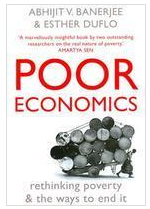
Poor Economics: A Radical Rethinking of the Way to Fight Global Poverty

By Abhijit V. Banerjee and Esther Duflo
image24 Top 10 Indian bestselling business books of 2011!Co-written by MIT professors, Poor Economics answers questions of whether a billion hungry people really exist or not, why the poor who don’t have enough to eat end up buying a TV, how having more children directly relates to poverty and so on. If you want to learn more about the economics of poverty, pick up this book which is also the winner of the 2011 Financial Times and Goldman Sachs Business Book of the Year Award.

ISBN – 9788184001815

Thorns To Competition

By Arindam & Rajita Chaudhuri
image25 Top 10 Indian bestselling business books of 2011!Although IIPM and its founders have undergone a lot of controversy for their institute offering MBAs, this book remained popular in 2011. With none less than SRK launching this book, the main theme is about the hard selling strategies of modern day marketing. Formulating an acronym for THORN (Target It Right/ Hit Where It Hurts / Obsess With It / Reinvent It / Nail It / Sell It), the book pretty much maintains aggression in marketing as its central theme – sounds familiar to what IIPM is doing, isn’t it?

ISBN – 9788125951940

Steve Jobs: An Exclusive Biography

By Walter Isaacson
image26 Top 10 Indian bestselling business books of 2011!Although this is not an Indian book, it has been a bestseller in India particularly because of the unfortunate death of Jobs, of course. Not much needs to be said about this book except that it is an absolutely stirring narrative of this creative genius. This book sold a little over 14,000 copies in its first week in India, compared with a massive379,000 in the United States.
ISBN - 9781408703748