Pages

Showing posts with label banking. Show all posts

Wednesday, March 9, 2022

BE(A)WARE – A Booklet on Modus Operandi of Financial Frauds by the RBI

As a part of the public awareness initiative by the Consumer Education and Protection Department, Reserve Bank of India, conceptualized by the office of Ombudsman, Mumbai-II, the Reserve Bank of India ("RBI") has on March 07, 2022, released a booklet, “BE(A)WARE” on the common modus operandi used by fraudsters and precautions to be taken while carrying out various financial transactions.

The booklet aims to enhance public awareness about various types of financial frauds perpetrated on gullible customers while carrying out digital payments and other financial transactions.

The booklet elaborates on safeguards against commonly used fraudulent techniques, such as SIM swaps, vishing/phishing links, lottery, etc., including fake loan websites and digital apps.

Part A and B of the booklet detail the commonly observed modus operandi and precautions to be taken against fraudulent transactions relating to banks and non-banking financial companies (NBFCs), respectively.

Part C of the booklet explains the general precautions and digital hygiene to be followed by the public.

The final section contains a glossary of commonly used terminologies in the performance of financial transactions with banks and other regulated entities of RBI to improve understanding thereof among the public.

Click here to access and download the Booklet - BE(A)WARE

Source: RBI Press Release: 2021-2022/1817

#BeAware #BeSecure #StaySafe #rbikehtahai #BeCyberSmart #DPAW #DigitalPaymentsAwarenessWeek

Friday, August 3, 2018

My Quora Answer about Action against Bank Officers

My Quora Answer to:

What sort of legal action can be taken against bank officers for continuously ignoring unfair trade practices complaints? What sort of legal action can be taken against bank corporate office for not taking any action against it's own officers?


If your bank does not address your complaint within a month, you can approach the banking ombudsman. This is a senior official appointed by the Reserve Bank of India to redress customer complaints against deficiency in banking services, as per its scheme introduced in 1995. All scheduled commercial banks, regional rural banks and scheduled primary cooperative banks are covered under the scheme. So far, there are 15 ombudsmen, whose offices are located mostly in state capitals. Their addresses and contact details are available on the RBI website. You have to file the complaint at the office of the ombudsman under whose jurisdiction your bank branch is located. The grievances relating to credit cards and other types of services with centralised operations are to be filed with the ombudsman in whose territorial jurisdiction the billing address of the customer is located. You can put it down on a plain paper, send an e-mail, or fill the complaint form on the RBI website. There are no charges for filing a complaint.
The Banking Ombudsman Scheme is an expeditious and inexpensive forum for bank customers for resolution of complaints relating to certain services rendered by banks. The Banking Ombudsman Scheme is introduced under Section 35 A of the Banking Regulation Act, 1949 by RBI with effect from 1995. Presently the Banking Ombudsman Scheme 2006 (As amended upto July 1, 2017) is in operation. [1] The addresses of the Ombudsman are here : link . Before filing the complaint, have a look at the types of the cases handled by the Banking Ombudsman, listed here.
Hope this answers your question.
Footnotes

Tuesday, July 18, 2017

12 Companies on the threshold of Insolvency


The Reserve Bank of India (RBI) last month asked creditor banks to begin insolvency proceedings against 12 of the country's biggest loan defaulters, and subsequently mandated that the banks would need to make provision for up to 50 percent of the amount of soured loans.

The 12 companies account for 1.78 trillion rupees ($27.7 billion) in non-performing bank loans, according to RBI data.

Banks had total non-performing loans of about 7.29 trillion rupees, or 5 percent of the gross domestic product, as of end-March.

India Ratings, an affiliate of Fitch Ratings, estimated the current average provisioning towards those 12 accounts at 42 percent, adding the extra provisioning needed would reduce the profits of creditor banks by about a quarter in the financial year to March 2018, and will need to make additional provisioning of at least 180 billion rupees ($2.8 billion).

Source - http://www.firstpost.com/business/banks-need-at-least-2-8-billion-extra-provisioning-for-bankruptcy-cases-india-ratings-3826585.html/amp

Monday, April 11, 2016

New Cheque Dishonour Amendment Explained - Gujarat HC - Times of India

In an important order in a cheque bouncing case, Gujarat high court has explained and clarified the new law regarding jurisdiction of courts in such matters and where an aggrieved party can file a complaint.

In this case, the petition was filed by a resident of Uttar Pradesh after an Ahmedabad-based firm moved the Ahmedabad metropolitan court under Section 138 of the Negotiable Instruments Act against a dishonoured cheque. The cheque was issued in Badalpur, UP, and deposited in a bank in Gorakhpur, UP. When the cheque was dishonoured due to inadequate balance, the payee filed a complaint in Ahmedabad.

The UP resident questioned the jurisdiction of Ahmedabad court on the ground that the cheque was issued in UP and delivered in UP. No action in the matter had taken place in Ahmedabad. On the other hand, the Ahmedabad-based firm argued that the complaint was maintainable because the company had its bank account in Ahmedabad.

Justice J B Pardiwala rejected the UP resident's contention and gave a clarification on the amended law. The court made it clear that "when the cheque is delivered for collection through an account, the complaint is to be filed before the court where the branch of the bank is situated, where the payee or the holder in due course maintains his account and, secondly, when the cheque is presented for payment over the counter, the complaint is to be filed before the court where the drawer maintains his account."

The issue has a curious history. In 2014, the Supreme Court ruled that cheque return cases can be filed in a court where the issuer (drawer) maintains his account. This resulted in shifting of lakhs of cases from one town to the other and caused complainants difficulties.

To put an end to the payee's troubles, the President promulgated the Negotiable Instruments (Amendment) Ordinance in June 2015. This provided that the complaint can be filed in a court where the payee maintains his bank account. While the amended law takes care of interest of the payee of the cheque, it also tries to ensure that drawer of multiple chequess is not harassed by payees filing different complaints at different places. In such a case, all complaints should be filed in the court where the first case was lodged.

Source -http://m.timesofindia.com/city/ahmedabad/High-Court-explains-new-cheque-bounce-law/articleshow/51751606.cms

Friday, August 22, 2014

Forensic Accounting - A Career Option


Forensic Accounting Beginnings

The term "forensic accounting" was first used in 1946 by Maurice E. Peloubet, a partner in a New York accounting firm. He wrote about the use of accounting in courtroom proceedings as part of testimony, but acknowledged that investigation was becoming more prevalent for accountants due to the increase in government agencies that regulated financial practices. Journals began to publish articles about the connections between law and accounting. In 1953, a New York lawyer named Max Lourie claimed that he invented the phrase "forensic accounting," although Peloubet wrote about it first. Lourie stressed the need for forensic accounting literature and training.

Forensic accounting service has been the growth industry in the 1990s. Called the private eyes of the corporate culture, forensic accountants must have an investigative mentality. A normal accountant acts like a watchdog, but a forensic accountant must be trained to act like a bloodhound. They look behind the facade and do not accept financial records at their face value.

Forensic Accounting

"Forensic" means "suitable for use in a court of law", and it is to that standard and potential outcome that forensic accountants generally have to work.

“Forensic accounting” is the practice of utilizing accounting, auditing, and investigative skills to assist in legal matters. Forensic accounting is the specialty practice area of accountancy that describes engagements that result from actual or anticipated disputes or litigation.

Forensic accounting is the application of accounting principles, theories, and disciplines to facts or hypotheses at issue in a legal dispute, and encompasses every branch of accounting knowledge.

There are two major aspects within forensic accounting practice -
1. Litigation support services that represent the factual presentation of economic issues related to existing or pending litigation. In this capacity, the forensic accounting professional quantifies damages sustained by parties involved in legal disputes and can assist in resolving disputes, even before they reach the courtroom. If a dispute reaches the courtroom, the forensic accountant may testify as an expert witness.
2. Investigative services that make use of the forensic accountant’s skills, which may or may not lead to courtroom testimony. It is the act of determining whether criminal matters such as employee theft, securities fraud (including falsification of financial statements), identity theft, and insurance fraud have occurred. As part of the forensic accountant’s work, he or she may recommend actions that can be taken to minimize future risk of loss. Investigation may also occur in civil matters. For example, the forensic accountant may search for hidden assets in divorce cases. An important criterion is the ability to respond immediately and to communicate financial information clearly and concisely in a courtroom setting. A forensic accountant must be open to examining all alternatives, scrutinising the fine details and at the same time seeing the big picture.
Forensic accounting can involve the application of special skills in accounting, auditing, finance, quantitative methods, certain areas of the law and research, and investigative skills to collect, analyze, and evaluate evidential matter and to interpret and communicate findings.

Application of Principles of Forensic Accounting to an organisation
• One premise of forensic accounting is to look for indications of abnormal occurrences in the accounting and financial reporting systems.
• Having a forensic accounting orientation to designing the accounting processes will provide an opportunity to design in steps for verification of key assumptions and data while also providing the opportunity for identifying possible fraud.
• The related area of forensic auditing can help in reducing the transaction processing risk by helping to perform audit type procedures on a routine schedule.
• Timely performance of audit type procedures can help management and internal audit function be more effective by helping to identify and resolve potential internal control breakdowns quickly and thoroughly. It can reduce external audit costs by regularly completing testing procedures that are part of the annual certified audit.
• In instances where information processing systems cover a broad array of businesses and/or locations establishing routine or continuous monitoring of all transaction processing systems, it can be considered as a type of forensic accounting.

Some of the areas that the principles and activities of forensic accounting can apply in an organization include:
• Reviewing operational transactions for compliance with standard operating procedures and approvals.
• Completing analysis of financial disbursement transactions in the accounting system to determine if they are normal or outside company policy and, thus, possibly fraudulent.
• Reviewing general ledger and financial reporting system transactions for possible improper classification or manipulation of data or accounts and its impact on the resulting financial reports.
• Examining warranty claims or returns for patterns of fraud or abuse.
• Helping estimate the economic damages and the resulting insurance claims that stem from calamities such as fires or other natural disasters.
• Evaluating or confirming business valuation in mergers and acquisitions.

 Forensic Accountants - The Bloodhounds of Book-keeping

 Forensic accounting requires the most important quality a person can possess: the ability to think.
There is no book that tells you how to do a forensic investigation. It is about solving a puzzle or peeling an onion. It takes creativity.
All of the larger accounting firms, as well as many medium-sized and boutique firms, have specialist forensic accounting departments. Within these groups, there may be further sub-specializations: some forensic accountants may, for example, just specialize in insurance claims, personal injury claims, fraud, construction, or royalty audits.

Forensic accountants may be involved in recovering proceeds of crime and in relation to confiscation proceedings concerning actual or assumed proceeds of crime or money laundering. In the United Kingdom, relevant legislation is contained in the Proceeds of Crime Act 2002. In India there is a separate breed of forensic accountants called Certified Forensic Accounting Professionals. Some forensic accountants are also Certified Fraud Examiners, Certified Public Accountants, or Chartered Accountants.

Forensic accountants utilize an understanding of business information and financial reporting systems, accounting and auditing standards and procedures, evidence gathering and investigative techniques, and litigation processes and procedures to perform their work. Forensic accountants are also increasingly playing more proactive risk reduction roles by designing and performing extended procedures as part of the statutory audit, acting as advisers to audit committees, fraud deterrence engagements, and assisting in investment analyst research.

The forensic Accountant is a bloodhound of Bookkeeping. These bloodhounds sniff out fraud and criminal transactions in bank, corporate entity or from any other organization’s financial records. They hound for the conclusive evidences. External Auditors find out the deliberate misstatements only but the Forensic Accountants find out the misstatements deliberately. External auditors look at the numbers but the forensic auditors look beyond the numbers.

Forensic accountant takes a more proactive, skeptical approach in examining the books of Accounting. They make no assumption of management integrity (if they can assume so then there is no need for their appointment) show less concerns for the arithmetical accuracy have nothing to do with the Accounting or Assurance standards but are keen in exposing any possibility of fraud.

In addition to the specialized knowledge about the techniques of finding out the frauds one needs patience and analytical mindset. One has to look beyond the numbers and grasp the substance of the situation. It is basically the work of the intelligent accountants. He needs to question seemingly benign document and look for inconsistencies. He searches for evidence of criminal conduct or assists in the determination of, or rebuttal of, claimed damages.

Who needs Forensic Accountants

Forensic accountants are more than just number crunchers who happen to work on criminal or civil disputes -- these accountants possess additional skills. They must conduct investigations, know how to use a variety of computer programs and communicate well. Some forensic accountants specialize in specific industries that are susceptible to fraud, such as insurance or banking, and learn the business practices associated with those fields.
Forensic Accountants work in most major accounting firms and are needed for investigating mergers and acquisitions, and in tax investigations, economic crime investigations, all kinds of civil litigation support, specialized audits, and even in terrorist investigations.
Forensic Accountants work throughout the business world, in public accounting, corporations, and in all branches of government.

Forensic Accounting in India

Forensic accounting is unique in that it combines accounting with investigation. These bloodhounds— as opposed to the watchdogs that are auditors— attempt to sniff out fraudulent transactions from the financial records of banks and companies.
Sherlock Holmes was probably the most famous practitioner But Kautilya was the first economist who openly recognized the need of the forensic accountants. He mentioned forty ways of embezzlement centuries ago.

The Opportunities for the Forensic Accountants are growing at the rapid speed. Collapse of Enron and World Trade Centre twin towers have blessed the American Forensic Accountants with the opportunities.
Forensic accounting is still nascent in India. However, the nature of fraud in India has undergone a change. Reserve Bank of India has made forensic accounting audit compulsory for banks in India. However banks are hesitant in approaching certified fraud examiners, and are mostly dependent on their internal auditors.
In India the formation of Serious Fraud Investigation Office is the landmark creation for the Forensic Accountants. Growing cyber crimes, failure of regulators to track the security scams, series of co-operative banks bursting - all are pinpointing the need of forensic accounting, irrespective of whether we understand the need or not.

In the Indian context the Forensic Accountants are the most required in the wake of the growing frauds. After the Satyam scam, forensic auditors are much in demand as many companies want to understand what could be the initial warning signals of a Satyam kind of fraud in other Indian companies. Even the government’s Serious Fraud Investigation Office (SFIO) has sought the help of forensic accountants to get to the root of the financial fraud at Satyam.

How to become a Forensic Accountant

Commerce graduates can easily take up forensic accounting as a career. You need to become a chartered accountant and then specialise in forensic accounting. The forensic accountants prior audit and accounting experience will be of tremendous assistance. But ultimately, it is only through working with experienced forensic accountants on various cases that one can learn the skills necessary to become a capable forensic accountant.
There are several organizations that provide training and additional certification for forensic accountants. Each organization requires that its members possess varying degrees of education and experience, and they must sit for additional exams. These certifications show that a forensic accountant has training and experience beyond that of a standard accountant.

 Some places where one can study and/or obtain certifications as Forensic Accounting Professional are:
• Institute of Chartered Accountants of India, New Delhi
• Association of certified fraud examiners (ACFE), USA
• Indiana University, Bloomington, USA
• British Columbia Institute of Technology, Canada
• Charles Stuart University, New South Wales, Australia

Some forensic accountants take courses in:
• Sociology
• Psychology
• Law enforcement
• Criminal law
• Business law
• Business and finance
• Information systems
• Communication

Conclusion

Forensic accountants are trained to detect evidence of frauds. Forensic accounting is about more than legal matters and financial numbers. There is an acute shortage of forensic accounting skill sets in India. A huge demand for forensic accountants has come up in the wake of the requirements from the investors after the Satyam fiasco. There are only about 400 forensic accountants in the country though India loses approximately $40 billion because of frauds.


Author - Rajkumar S. Adukia
Senior Partner, Adukia & Associates, Chartered Accountants
Mumbai 400 058
Email rajkumarfca@gmail.com

Source - Forensic Accounting - 
http://www.caclubindia.com/articles/forensic-accounting-20172.asp#.UzRcBPmSxhY

Sunday, August 3, 2014

Now a Social Media Linked Bank Account - Kotak Jifi


Kotak Mahindra Bank has launched Jifi, a fully-integrated social bank account with youth as the target segment. Jifi transcends digital banking by seamlessly incorporating social networking platforms such as Twitter and Facebook with mainstream banking, the bank said.


Jifi is a zero-interest current account with no minimum balance conditions, and can be opened with an initial payment of Rs 5,000. All balances over Rs 25,000 automatically move into term deposits at applicable interest rates. Opening a Jifi account is triggered by a self-invite by signing up through Facebook or email.


K V S Manian, president (consumer banking) at Kotak Mahindra Bank Limited, said: “Jifi is a unique digital account that integrates social media platforms like Twitter and Facebook for secure and seamless on-the-go information. With Jifi, the first-of-its-kind digital account, Kotak takes banking to the next orbit by providing a hassle-free proposition to tech-savvy persons who prefer to stay online at all times.”


Jifi also has a loyalty point programme encourages high level of interactivity among account holders. In addition to transacting on social media platforms, customers can transact through net banking and the Kotak Mobile Banking app.


Jifi customers have access to all conventional bank offerings as well, which include pan-India branch and ATM network, ‘platinum’ debit card, all-India toll-free number, net card and net banking access, etc. 

The bank believes that in the next three to five years, 30-50 per cent of account openings will happen through this initiative.


“As far as the security features are concerned, if the Facebook or Twitter account of the customer is hacked, then the hacker will be at the most able to see the reward points of the customers and use those points. But they will not be able to do any transactions or check the bank balance of the customer. The customer's banking details are fully secure and cannot be seen by the hacker. For transactions, the customer has to log in to net banking,” said Deepak Sharma, executive vice-president and head-digital initiatives, at Kotak Mahindra Bank.


Jifi is currently available for resident Indians in select locations including Mumbai, Delhi, Chennai, Kolkata, Bangalore, Hyderabad, Pune, Coimbatore, Jaipur and Lucknow. The account can be accessed from anywhere in the world.


For more info Visit - http://www.kotakjifi.com

Thursday, September 19, 2013

Avoid These 10 Biggest Risks Of Mobile Banking - From Siliconindia.com


The pace of life is increasing, so is the need of people to adjust with it. ‘The quicker the better’ is the latest slogan and as such people rely a lot in technology to make their life better. The major influence of technology can be seen in banking sector that evolved over the years. Gone are the days when people used to queue in front of banks to deposit a check or fulfill a mere banking formality. But now the trend is of mobile banking. But like most of the stories have a flip side, so thus mobile banking, reports Sienna Kossman of U.S. News.
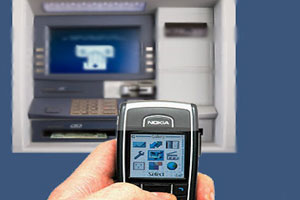

Mobile banking brings pleasure as well as pain because of the dangers mentioned hereof–


1. Information in Mobile devices is as vulnerable as in computers

It’s a well known fact that feeding extensive private information in public computers is dangerous. So is the case in mobile devices that act as tiny computers. “Mobile banking apps are connected to wireless networks, and these networks are inherently insecure as they broadcast their messages into the open air,” said Ron Vetter, co-founder of Mobile Education LLC and member of IEEE Computer Society.

2. Having a Password is necessary

Using your phone or device without password is like leaving your home unlocked while you are away. It enhances the chances of misuse, if you ever lose your phone. To ensure protection of your bank information, a complicated password is most desired. Without proper security measures like password, anyone can log into your app and get access to your bank details. Passwords might not be able to save you entirely from mobile info theft but would at least increase your chances of survival.

3. Never allow your device to auto-save password

Allowing your device to auto-save your password is like having no password at all. “One should never allow apps to remember usernames and/or passwords,” said Ron Vetter. The information becomes easily available to anyone who can lay a hand on your mobile or device if the username and password is already saved.

4. Resist using shared devices
Using shared devices for mobile banking increases the chances of losing valuable account information. Make sure that other users are not surfing high-risk sites as it enhances the probability of users downloading key-logging software onto your device and hence compromise your mobile banking session.


5. Depositing check with the help of camera and banking app

Banks try not to provide instant funds to those who deposit checks remotely with the help of a camera and banking app. The time taken to release funds when a check is deposited in ATM or bank is much less than time spent waiting for funds when you provide check via banking app. This is a measure to protect banks against fraud.


6. Download apps directly from bank’s website

There are a lot of fake apps on the run and using one of them may make you lose important information and eventually detach you from your money. Just because an app is downloaded from an app store does not ensure it authenticity. “Consumers tend to assume that just because an application is on an app store, it’s been heavily vetted by either Google, Apple or otherwise,” said Doug Johnson, vice president of risk management at the American Bankers Association.


7. Some devices are more prone to viruses than others

“In the fourth quarter of 2012, 97 percent of all of the malware released into the mobile environment was targeted against Android,” said Julie Conroy, a research director for Aite Group. Android has been a current favourite of developers of malware viruses since most other brands are not immune to viruses. Smart phones are more susceptible to viruses and hence more prone to losing valuable banking information.


8. Use storage cards to save bank details

Never save sensitive information directly in your phone and instead use storage cards. Most of the time, your phone might save information even after you have cleaned its memory. Try and use a program that will completely clean your device especially before you discard or resell your mobile.


9. Always update security apps

Do not ignore notification about security updates since it is most essential in case you have confidential information saved in your device. “Sometimes those updates include security updates, and you want to make sure you have the latest and greatest version of the whole app,” Julie Conroy said.


10. Strong network means stronger security

The probability of losing messages or information in transit is much higher when operating network connectivity is low since mobile apps broadcast data into open air. While doing mobile banking, make sure you are in a strong network service range.


Source -

Avoid These 10 Biggest Risks Of Mobile Banking:

'via Blog this'